 11

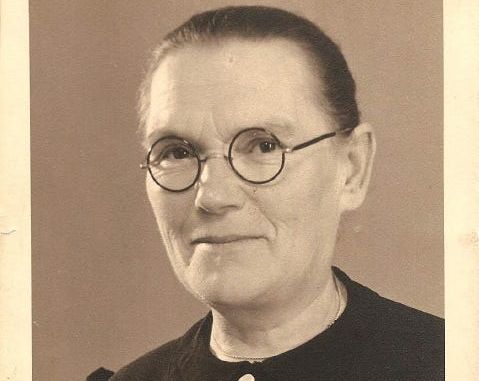
From the late nineteenth century into the twentieth, the world moved from horse-drawn transport to rockets orbiting the Earth, while Europe endured two world wars, economic crises, and profound social change.
Roelfke Tuinman was born in Leek, Groningen, Netherlands on Sunday, 22 June 1884, under the star sign Cancer in the Chinese year of the Monkey. She belonged to the Lost Generation, the generation that came of age during World War I and was often characterized by disillusionment, cynicism, and a questioning of traditional values.
She was the fifth of eight children and fourth daughter of her parents, Jan Tuinman (1850) and Geertje Veldhuis (1847).
The year 1884 stood firmly in the age of empires and industrial progress. Across Europe and beyond, nations were expanding their influence, building railways, factories, and modern cities. In November of that year, representatives of fourteen countries gathered for the Berlin Conference, where European powers negotiated the rules for colonizing and dividing large parts of Africa. The conference formalized the “Scramble for Africa”, shaping the political map of the continent for decades to come. Those decisions would influence the lives of millions of people across Africa and Europe alike for generations.
From a rural childhood in Groningen to witnessing the dawn of the Space Age, Roelfke Tuinman lived through a lifetime in which the world changed faster than any generation before her.
After the death of William III of the Netherlands in 1890, his ten-year-old daughter Wilhelmina of the Netherlands became queen. Because she was still a minor, her mother, Emma of Waldeck and Pyrmont, governed the country, serving as regent from 1890 until 1898. During these eight years, Queen Emma acted as head of state, representing the monarchy and ensuring political stability during the young queen’s childhood.
Emma was 32, a woman (in a time when women couldn’t vote in the Netherlands), and of German origin, starting her regency with low expectations, yet she quickly won over the public and proved to be a careful and capable regent.
She worked closely with the Dutch government, respected the country’s constitutional system, and avoided political controversy. Her calm and dignified leadership strengthened public confidence in the monarchy when the Netherlands was modernizing and expanding economically.
Emma also focused strongly on preparing Wilhelmina for her future role as queen. She ensured her daughter received a thorough education in history, politics, languages, and statecraft, while gradually introducing her to royal duties. When Wilhelmina turned eighteen in 1898, she was formally inaugurated as queen in Amsterdam.
The regency of Queen Emma is often remembered as a period of stability and careful preparation, helping to secure the Dutch monarchy during a time when many European royal houses were facing growing political pressure.
During World War I, the Netherlands remained officially neutral. While fighting devastated much of Europe, the Dutch government under Wilhelmina of the Netherlands and successive prime ministers worked carefully to avoid being drawn into the conflict. The country mobilized its army to defend its borders and prepared for the possibility of invasion, but it did not take part in the war itself.
Although the Netherlands avoided direct combat, the war still had a significant impact on daily life. Trade was severely disrupted because the country lay between the warring powers of Germany and the United Kingdom. Food and other goods became scarce, leading to rationing and rising prices. The Dutch government had to balance economic relations with both sides while maintaining its neutral position.
The Netherlands also became a refuge for people fleeing the war. In 1914 alone, around one million Belgian civilians crossed the border after the German invasion of Belgium. Many later returned home, but large refugee camps were established to house those who stayed. In addition, the Dutch interned thousands of foreign soldiers who entered their territory for the remainder of the war.
Despite remaining neutral, the war years placed great economic and social strain on the country.

Roelfke’s life stretched across one of the most turbulent periods in modern history. She was born into a world still ruled by kings and empires, lived through two world wars, economic hardship, and occupation, and died just months before humanity entered the space age.
But history is not only shaped by wars, inventions, and political changes. Ordinary families who endured those events in their daily lives also carried it forward. Roelfke Tuinman raised her children during years when food shortages, economic crises, and uncertainty were part of everyday life.
The hunger experienced during both world wars must have echoed older memories in the family. Only a few decades earlier, the grandfather of her husband Marten (they carried the same name) had lived in the penal colonies of Veenhuizen, where food was strictly rationed and survival often depended on hard labor. Scarcity and resilience were threads that ran through several generations.
Roelfke herself witnessed a world transform—from the industrializing Netherlands of the 1880s to the moment in 1957 when the Soviet Union launched Sputnik 1, the first artificial satellite.
Within a single lifetime, humanity had moved from steam power to space.


One thought on “BACK IN TIME: Roelfke Tuinman (1884–1957)”