Popular Posts

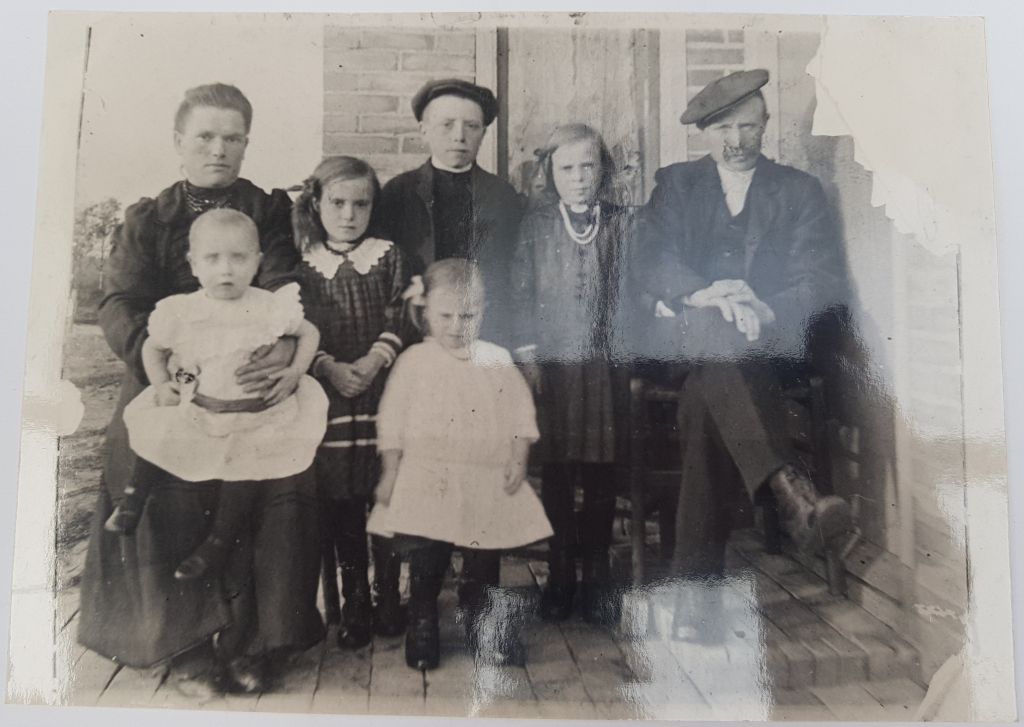
BACK IN TIME: Marten Kuiper (1882–1939)

Antoinette’s maternal great-grandfather; Susan’s maternal great-great-grandfather


The late nineteenth century was a time when the Netherlands was slowly transforming from a largely rural society into a more industrial one. As factories expanded, workers moved into wage labour, and new social and political ideas began reshaping everyday life.

Marten Kuiper was born in Zevenhuizen, Groningen, Netherlands on Tuesday 29 August 1882, under the star sign Virgo in the Chinese year of the Horse. He belonged to the Missionary Generation, which were described as the ‘home-and-earth children of the post-Civil war era.

He was the oldest of seven children and the first son of Jan Kuiper (1857) and Tjipke de Vries (1861).

The year 1882 fell during a period when industrialization in the Netherlands was steadily expanding. Factories, shipyards, and workshops were employing increasing numbers of workers, while railways and canals connected towns and cities more closely than before. At the same time, living and working conditions for labourers were often difficult, which led to growing debates about workers’ rights, education, and political representation that would shape Dutch society in the decades that followed.

Marten’s life reflects that of many working-class families of the time: building a household, raising children, and earning a living through factory labour while the Netherlands gradually entered the modern industrial age.

Important events during Marten’s life

  • 1883 – 27 August: After eruptions started in May of this year, a major eruption of the Krakatau occurs in the Dutch West Indies. This results in the deaths of over 36.000 people.
  • 1884 to 1885 – European powers formalize the “Scramble for Africa” at the Berlin Conference, dividing the continent into colonial spheres of influence.

Between 1884 and 1885, European powers met at the Berlin Conference, where they formalized the rules for claiming territory in Africa. The conference was convened by Otto von Bismarck in Berlin and brought together representatives from major European nations, including Britain, France, Germany, Belgium, Portugal, and others. No African leaders were invited to participate.

The meeting established guidelines that allowed European states to claim African territory if they demonstrated “effective occupation,” meaning they had administrative or military control over the area. Although the conference did not literally divide Africa on maps at that moment, it set the diplomatic framework that accelerated the Scramble for Africa.

In the years that followed, European powers rapidly expanded their control across the continent, establishing colonies and protectorates. By the early twentieth century, almost all of Africa had been claimed by European states, with only a few regions remaining independent. The decisions and agreements made during this period had long-lasting consequences, shaping political borders, colonial administrations, and conflicts that would influence African history well into the twentieth century.


  • 1885 – 21 September: Dutch people publicly demonstrate for general voting rights (suffrage).
  • 1890 – 23 November: King William III dies without any surviving male heirs. Since Luxembourg law prohibits female succession, the personal union between them and the Netherlands ends, and Queen Wilhelmina ascends the throne at only 10-years-old, with her mother, Queen Emma, acting as regent.
  • 1901 – The Netherlands passes the Leerplichtwet (Compulsory Education Act), requiring all children between the ages of 6 and 12 to attend school. While it marks a major shift, children with learning difficulties are sometimes exempt.
  • 1901 – 1 August: Abraham Kuyper becomes Prime Minister of the Netherlands.
  • 1905 – 23 September: Marriage to Roelfke Tuinman (1884) in Roden, Drenthe, Netherlands.
  • 1905 – The Russian Revolution takes place, with the people demanding reforms from the Tsar to improve living conditions of the peasants and workers.
  • 1906 – 4 September: Birth of son, Jan, in the Roderveldquarter in Roden, Drenthe.
  • 1908 – 3 September: Birth of daughter, Geertje, in Roden.
  • 1910 – 7 June: Birth of daughter, Tjipke, in Roden.
  • 1912 – 1 October: Birth of son, Kornelis, in Roden.
  • 1914 – 5 July: Birth of daughter, Jeepina.
  • 1914 to 1918 – World War I. The Netherlands stays neutral.
  • 1916 – 25 June: Birth of son, Jan Albert.
  • 1917 – 22 March: Death of son, Kornelis, in Dwingeloo.
  • 1917 – The Dutch constitutional reform, also known as the Pacification of 1917, resolves two of the longest running disputes: the suffrage issue and the school struggle. This reform moves the Netherlands from a limited democracy to a universal male suffrage system with proportional representation.
  • 1918 – 28 July: Birth of son, Kornelis, in Dwingeloo, Drenthe.
  • 1918 – Following the war, Kaiser Wilhelm II of Germany went into exile in the Netherlands.
  • 1919 – The Netherlands officially grants women voting rights.
  • 1920 – 25 April: Birth of daughter, Derkien.
  • 1920 – 19 February: Netherlands joins the League of Nations.
  • 1921 – 29 July: Adolf Hitler becomes Führer of the Nazi Party in Germany.
  • 1922 – 24 January: Birth of son, Albert.
  • 1924 – 25 January to 5 February: The first edition of the Winter Olympics takes place in Chamonix, France.

The first Winter Olympic Games were held in Chamonix, a mountain resort in the French Alps at the foot of Mont Blanc. The event, organized by the International Olympic Committee, was initially called “International Winter Sports Week.” Its success later led the committee to officially recognize it as the first Winter Olympics.

Around 250 athletes from 16 nations took part in the competition, which featured 16 events across several winter sports, including ice hockey, figure skating, bobsleigh, curling, skiing, and speed skating. Only 13 women competed, and they participated exclusively in figure skating events, reflecting the limited opportunities for female athletes at the time.

Athletes from northern Europe dominated many of the competitions. Norwegian skier Thorleif Haug won several events in Nordic skiing, while Finland’s Clas Thunberg became one of the most successful competitors in speed skating. The Games also helped popularize winter sports internationally and established a tradition that would continue every four years, making the Winter Olympics one of the world’s most recognized sporting events.


  • 1924 – 26 July: Birth of daughter, Aldertina, in Hogersmilde, Drenthe.
  • 1926 – 17 August: Death of daughter, Geertje, in Smilde, Drenthe, Netherlands.
  • 1929 – The Wall Street Crash erases billions in value, ending the “Roaring Twenties” and triggering a decade-long worldwide economic crisis. This also had an impact on laborers, like Marten Kuiper.
  • 1932 – Completion of the Afsluitdijk, closing off the Zuiderzee.
  • 1933 – 30 January: Adolf Hitler becomes the German chancellor. This marks the beginning of the Nazi dictatorship.
  • 1934 – 23 May: Bonnie and Clyde, famous outlaws, are shot to death by police in Louisiana, United States.
  • 1935 – 15 September: The Nuremberg Laws pass, stripping German Jews of citizenship and banning intermarriage.
  • 1936 – The Dutch strictly reaffirms its policy of neutrality amid rising European tensions.
  • 1936 – The Spanish Civil War begins.
  • 1937 – 27 March: The Feijenoord Stadium, home ground of Dutch football club Feyenoord, opens after 2 years in construction. The stadium is nicknamed “De Kuip”.
  • 1939 – 7 January: Marten dies in Smilde, just months before World War II begins.

29 August over the years…

  • 1526 – The Battle of Mohács defeats Hungary by the Ottoman Empire.
  • 1842 – The Treaty of Nanking ends the First Opium War.
  • 1882 – Australia defeated England in a cricket match at The Oval, an event so shocking that British newspapers jokingly published an obituary for English cricket — giving birth to the famous The Ashes. This day was dubbed: The death of English cricket.
  • 1915 – Birth of Ingrid Bergman, Swedish actress, born in Stockholm, Sweden.
  • 1949 – The Soviet Union tests its first atomic bomb.
  • 1958 – Birth of Michael Jackson, American recording artist, dancer and King of Pop, born in Gary, Indiana.
  • 2005 – Hurricane Katrina strikes the U.S. Gulf Coast. It made landfall near Buras-Triumph, Louisiana, as a powerful Category 3 storm, causing catastrophic, widespread devastation. It hit New Orleans the hardest, where failed levees submerged 80% of the city, killing over 1.390 people.

A life in a changing country

As factories expanded and industrial work became more common, increasing numbers of families relied on wage labour rather than traditional agricultural work. For many working-class households, life was shaped by long hours of labor, modest living conditions, and the importance of family and community support.

During these decades the Netherlands also underwent significant political reforms. Compulsory education was introduced, voting rights were gradually expanded, and new social policies slowly began to improve conditions for workers and their families. These developments reflected a society that was adjusting to the realities of industrial life.

Like many families of the era, the household of Marten Kuiper also experienced both joy and loss. Children were born, a family was raised, and the hardships of illness and early death, which were still common in the early twentieth century, were part of life.

He died in 1939, just months before the outbreak of the Second World War, at the end of a lifetime that had spanned the transition from the nineteenth-century world of small communities into the uncertain modern age that lay ahead.

One thought on “BACK IN TIME: Marten Kuiper (1882–1939)”

Leave a Reply

Your email address will not be published. Required fields are marked *

error: Content is protected! Please respect our work.