 11

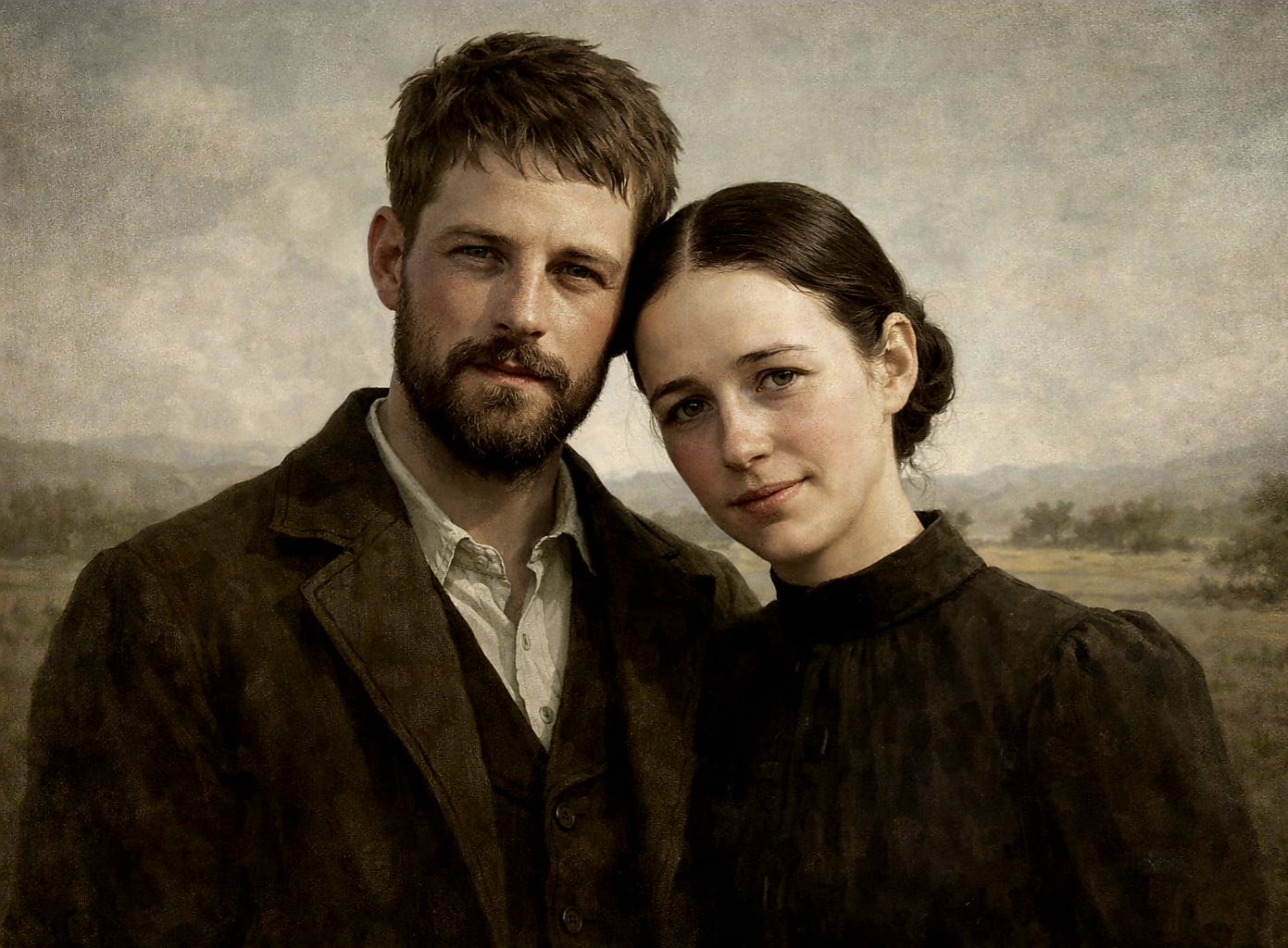
In the second half of the nineteenth century, many Boer families in the South African Republic (Transvaal) stood at a crossroads. Some chose to stay and continue building on what they already had, while others felt called to leave everything behind and travel north, into the unknown. This movement would later become known as the Dorsland Trek.
There were several reasons why families decided to leave the Transvaal.
Many Boers were politically dissatisfied with the government under President Thomas François Burgers. They felt increasingly restricted and feared growing British influence. Some believed that the only way to live freely was to leave the republic altogether and establish a new, independent community elsewhere.
Religion also played an important role. A large number of trekkers belonged to the Dopper community of the Reformed Church. They rejected developments within the Dutch Reformed Church and sought religious freedom according to their own convictions.
Economic hardship added to this unrest. Long periods of drought, poor grazing, and declining opportunities made farming difficult. At the same time, stories circulated about fertile land further north, especially in Portuguese Angola near Humpata. These stories offered hope.
There was also what many called the “trek spirit” — a deep-rooted cultural belief that when life became too crowded or restrictive, it was time to move on.
Growing up in the Transvaal during the late 19th century, Pieter Jacobus Vorster (1868) would have been familiar with the talks of the time. Around kitchen tables, at church gatherings, and on neighboring farms, the adults discussed the challenges facing the Boers. For Pieter, the idea of the road north was always present, laying somewhere between hope and fear.
But Pieter was not free to decide lightly.

The lamp burned low above the kitchen table.
Pieter’s father sat with his hands folded, his shoulders heavy with years of labor. He listened as Pieter spoke about the treks, about the land in the north, about the Steyn family who were already preparing to leave.
When Pieter finished, the room fell silent.
“This land is enough,” his father finally said. “It was enough for your grandfather. It was enough for me. It should be enough for you.”
Pieter looked down at the table, at the worn wood marked by generations. He knew his father was not speaking out of fear, but out of loyalty — to the land, and to what had already been built.
“I know,” Pieter said quietly.
But knowing did not make the choice easier.
Just as strong as the reasons to leave were the reasons to stay.
Many Boers had already built stable lives in the Transvaal. They owned land, homes, livestock, and productive farms. For them, the risk of crossing the Kalahari Desert was too great. They had too much to lose.
Others lacked the means to leave. A trek required strong wagons, healthy oxen, supplies, and weapons. Poorer families simply could not afford such a journey.
Politically, many believed that reform should happen from within. The rise of Paul Kruger, himself a Dopper, gave hope that the republic could still be protected and strengthened. Leaving felt, to some, like abandoning the Transvaal at a time when it needed loyalty most.

Then there were the stories. Reports from the early treks spoke of terrible drought, thirst, disease, and death. Malaria claimed many lives, and thousands of animals were lost. Entire families perished. For many, the “Dorsland” became something to fear rather than to follow.
Religion, too, divided communities. Not all ministers supported the treks. Some warned that the journey was reckless and would tear families apart.
And finally, there was family. Leaving often meant a final farewell — to parents, brothers, and sisters. Many chose the security of their community over the dangers of the unknown.
Pieter’s father, Barend Johannes Marthinus Vorster (1845), was one of them. He believed in the Transvaal. In staying. In holding on to the land that had already been paid for with years of labor and loss. Leaving, to him, meant giving up everything his family had built. And Pieter understood that.
In May 1892, Pieter’s mother, Aletta Johanna Vorster (née Steyn) (1849), passed away. Her death changed the atmosphere of the farm in ways that were difficult to describe. She had been the steady heart of the family. With her gone, something fundamental felt broken.
Aletta had been born a Steyn. She was the sister of the father of Cecilia Johanna Steyn (1872), Pieter’s wife. Yes, you understood that correctly — Pieter and Cecilia were, in fact, first cousins. The connection between the Vorsters and the Steyns was therefore not only through marriage, but through blood.
Pieter walked the fields alone. The wind moved through the grass as it always had, but something was missing. Without his mother, the land no longer held him in the same way.
Sometimes he wondered whether that was why he felt drawn more strongly toward Cecilia’s family now. Through them, his mother’s name lived on. Through them, her memory felt closer. Through them, the loss felt slightly less sharp.
Despite the dangers, the treks continued.
The first trek (1874–1875) was led by Gert Alberts and consisted of about 13 families. They gathered near the Elandsrivier in Groot-Marico and left the Transvaal without a clear final destination.
The second trek (1875–1877) began with only seven families, but grew to more than 100 families and 128 wagons under leaders such as Jan Greyling and Louw du Plessis. Poor leadership and harsh conditions led to disaster. It is estimated that between 200 and 300 people died. Survivors eventually returned to the Transvaal, carrying stories that would haunt later generations.
The third trek (1877), under Jacobus Frederik (Koos) Botha, included eight families and about 40 people and left from Dwarsspruit near Rustenburg.
Later treks followed.
The fourth trek (1891–1892), under Willem Prinsloo, with 11 families and 17 wagons, reached Humpata in December 1892.
The fifth trek (1892–1893), led by Koos Hamman from Bethal, consisted of seven families and arrived in Humpata in November 1893. Some of these families were survivors of the second trek.
By this time, Pieter Jacobus Vorster was no longer just listening to stories. The decision stood before him.
Cecilia stood beside the wagon, tying down a bundle of belongings. Her movements were calm and practiced.
“If you stay,” she said, without turning toward him, “I will understand.”
Pieter shook his head. “I will lose you.”
She looked at him then. Not with anger or blame. Only with truth.
“I cannot stay,” she said. “My family is leaving.”
Pieter knew what that meant. Staying would mean living a life in which Cecilia existed only in memory. Leaving would mean carrying his father’s silence with him forever.
At the end of 1892 and into early 1893, the sixth Dorsland Trek began. About 100 families left the Transvaal.
The group divided. One section, consisting of 63 families with 66 wagons, led by Kommandant Johannes Marthinus Lombard, followed the traditional route via Lake Ngami to Ghanzi. A second group of 28 wagons, led by Pieter Johannes Steyn and Johannes Hendrik Steyn, traveled through southern Bechuanaland via Lehututu and Kang.
Pieter Jacobus Vorster and Cecilia Johanna Steyn were part of this Steyn-led group. They traveled with Cecilia’s parents, brothers, and sisters.
Pieter Jacobus was the only member of the Vorster family to join the Dorsland Trek. His father, brothers, and sisters remained behind in the Transvaal.
That night, Pieter stood outside while the house slept.
The stars above the Transvaal were the same stars his father had known all his life. They would be the same stars he would see from the desert, and later from Angola.
He understood then that the choice was not between right and wrong. It was between whom he could not leave behind.
And so he chose his wife.
The choice was painful and final. But it was made.
This was the beginning. The wagons had not yet rolled. The desert still lay ahead. But the hardest step — the decision — had already been taken.
SOURCES:
Wikipedia – Dorsland Trek
Dr. Nicol Stassen – South African historian and publisher, considered the leading expert on the Dorsland Trek and the Afrikaners who traveled from the Transvaal to Angola in the late 19th century.
To be continued…


2 thoughts on “THE DORSLAND TREK – Part 1: Whispers of the North”