 11

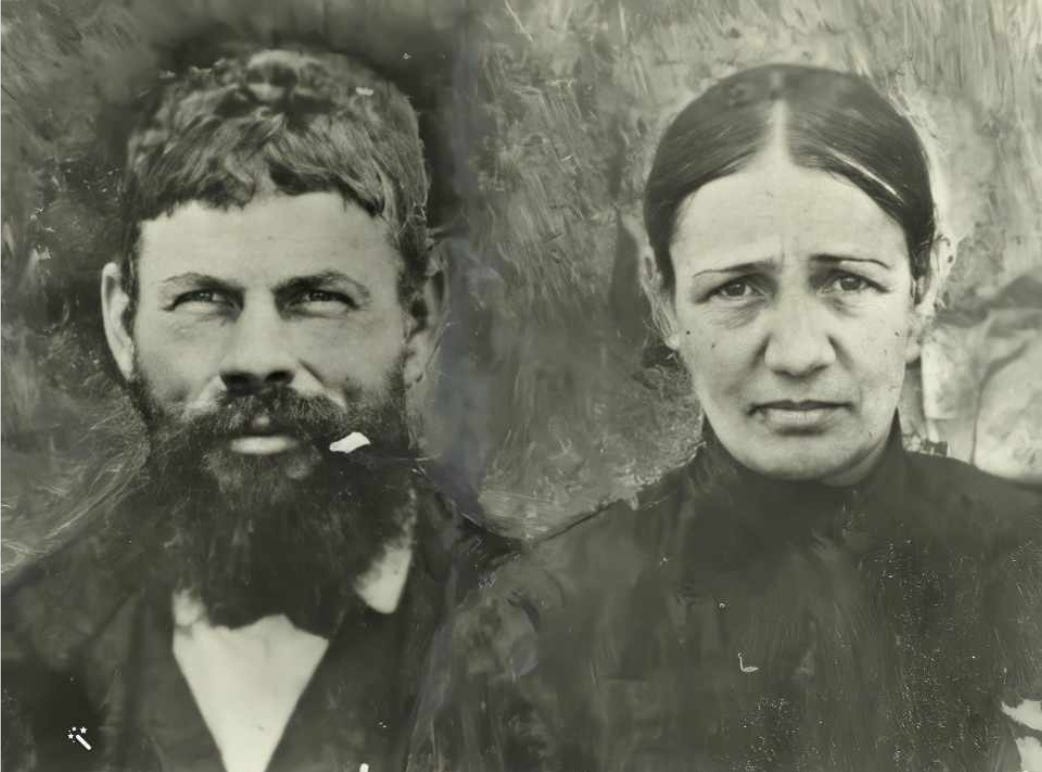
During the second half of the nineteenth century, southern Africa was a region of migration, conflict, and colonial influence, as Boer communities moved northwards while European powers increasingly competed for territory across the continent.
Pieter Jacobus Vorster was born in Rustenburg, South Africa on Sunday, 9 August 1868, under the star sign Leo in the Chinese year of the Dragon. He belonged to the Missionary Generation, which was the last generation that experienced Victorian times, and was known for their stern idealism.
He was the first son and the oldest of the six children born to his parents, Barend Johannes Marthinus Vorster (1845) and Aletta Johanna Steyn (1849).
In 1868, the independent kingdom of Basutoland became a British protectorate after years of conflict between the Basutho (now known as Basotho) and expanding Boer settlers. The decision by the British government to declare Basutoland a protectorate helped preserve the territory as a distinct political entity, which later became the modern nation of Lesotho. Across the wider region, tensions between African kingdoms, Boer republics, and the expanding British Empire were reshaping the political landscape of southern Africa.
From the farms of the Transvaal to the long journey of the Dorsland Trek and the settlements of Angola, Pieter Jacobus Vorster’s life followed the path of many Boer pioneers who sought land, independence, and a new future beyond the borders of the South African Republic.
The London Convention was signed between the United Kingdom and the South African Republic. The agreement revised the earlier Pretoria Convention, which had been established after the First Boer War.
The London Convention granted the Transvaal greater independence in its internal affairs and removed several of the restrictions that Britain had previously imposed. While the British government still retained a limited role in overseeing the republic’s foreign relations, the agreement effectively restored the South African Republic as a largely self-governing Boer state.
For many Boer leaders, the convention represented an important diplomatic victory after their military success against British forces during the First Boer War. It allowed the republic to govern itself and continue developing its institutions and economy during a period when southern Africa was experiencing rapid political and economic change, including the discovery of valuable mineral resources.
The agreement remained in force until tensions between Britain and the Boer republics escalated again in the late nineteenth century, eventually contributing to the outbreak of the Second Boer War.

Between 1904 and 1908, German colonial forces carried out what is widely regarded as the first genocide of the twentieth century in German South West Africa. The violence followed uprisings by the Herero in January 1904 and later the Nama, who resisted German colonial rule, land seizures, and harsh treatment by settlers and authorities.
Germany responded with overwhelming military force. In August 1904, after defeating Herero fighters at the Battle of Waterberg, German commander Lothar von Trotha issued an extermination order declaring that the Herero people were to leave the colony or be killed. German troops drove thousands of Herero men, women, and children into the Omaheke Desert, where many died of thirst and starvation.
Survivors were captured and placed in forced labour camps, including the notorious Shark Island concentration camp (in the bay of Lüderitz), where disease, abuse, and exhaustion caused extremely high death rates. Historians estimate that up to 80 percent of the Herero population and about half of the Nama population perished.
Today, the Herero and Nama genocide is recognized as one of the earliest genocides of the modern era and remains a significant and painful chapter in Namibia’s history.


Throughout his life, Pieter Jacobus Vorster witnessed a period of enormous change in southern Africa. Born during the era of the Boer republics, he lived through wars, colonial expansion, and the gradual reshaping of the region’s political map. The world in which he was born was still largely rural and frontier-like, yet by the time of his death the region had been transformed by global conflicts, modern states, and shifting colonial powers.
His decision to join the Sixth Dorsland Trek in 1893 placed him among a group of Boer families who left the Transvaal in search of independence and land further north. The trek was long and difficult, crossing arid landscapes before finally reaching Angola, where many of the trekkers attempted to establish new farming communities.
There, far from the places of his birth, Pieter Jacobus Vorster raised a family and spent much of his life in the remote settlements of southern Angola. Like many pioneer families of that era, their lives were shaped by distance, hardship, and the determination to build a stable future in unfamiliar surroundings.
His life formed part of a larger story of migration and settlement that connected the Boer republics of southern Africa with the remote frontier regions far beyond their borders.
Many of his descendants still feel the “trek spirit” in their veins.


2 thoughts on “BACK IN TIME: Pieter Jacobus Vorster (1868–1949)”