 11

The early twentieth century was a period of enormous change, as the world moved through industrial growth, global conflict, and rapid technological progress. These developments reshaped societies and created both new opportunities and new uncertainties.
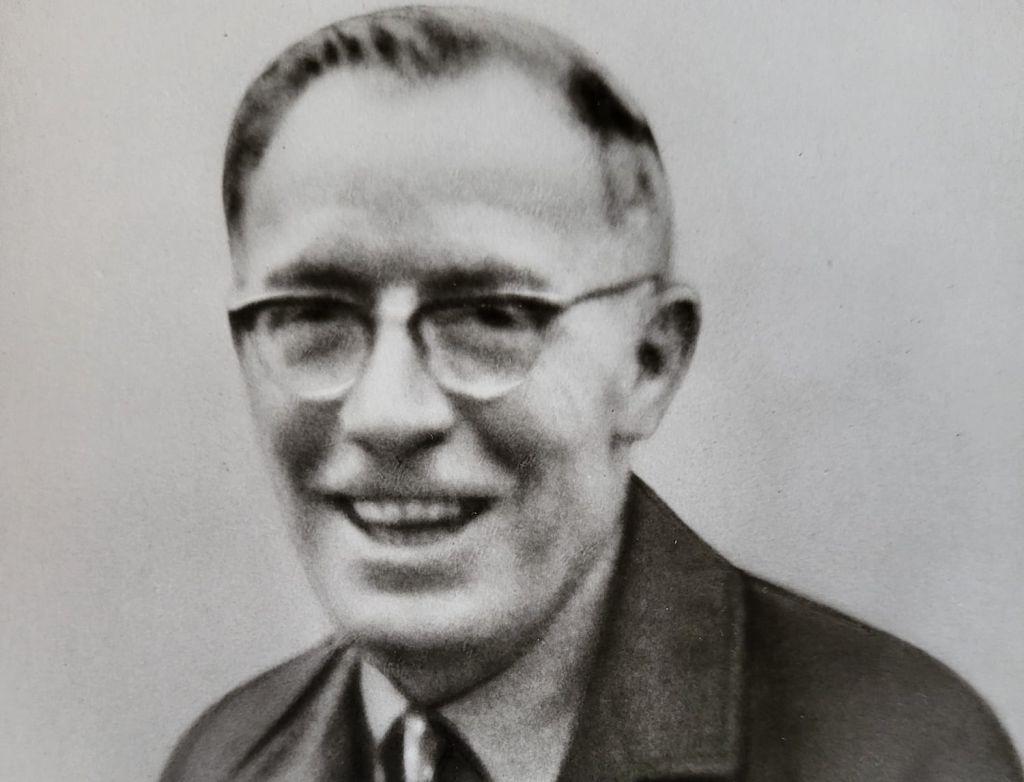
Jan Kuiper was born in the Roderveld quarter, Roden, Drenthe, Netherlands on Tuesday, 4 September 1906, under the star sign Virgo in the Chinese year of the Horse. He belonged to the Greatest Generation, which had strong work ethics, patriotism, frugal spending, and high levels of social conformity.
He was the oldest of four children, and the first of two sons born to Marten Kuiper (1882) and Roelfke Tuinman (1884).
The year 1906 took place during a time when the Netherlands was gradually modernizing while still maintaining its traditional character. Railways and industry were expanding, cities were growing, and new social reforms were slowly improving education and working conditions. At the same time, Europe was entering a period of rising political tensions that would eventually lead to the global upheavals of the twentieth century.
Jan’s life would span some of the most dramatic events of the twentieth century, from two world wars to a new life on another continent.
In 1917, the Pacification of 1917 brought an end to two long-standing political conflicts in the Netherlands: the struggle over voting rights and the dispute over state funding for religious schools. For decades, political parties had been divided between those who supported broader democratic participation and those who defended the interests of religious communities in education.
The reform introduced universal male suffrage, greatly expanding the number of citizens who could vote in national elections. At the same time, it established equal government funding for both public and religious schools, resolving the so-called “school struggle” that had dominated Dutch politics since the nineteenth century. The agreement represented a compromise between liberal, socialist, and Christian political groups.
Another important change was the introduction of proportional representation in parliamentary elections. This new system allowed political parties to gain seats in parliament according to the percentage of votes they received, giving smaller parties a stronger voice in government.
The constitutional reform marked a major step in the democratization of Dutch society. It laid the foundation for the modern Dutch political system and paved the way for women’s suffrage.

About 20,000 women from across South Africa marched to the Union Buildings in Pretoria on 9 August 1956 to protest the extension of apartheid pass laws to women. The demonstration was organized by the Federation of South African Women and brought together women of different racial backgrounds in a rare united protest.
The march was directed against the pass system, which required Black South Africans to carry identification documents controlling where they could live, work, and travel. The government planned to extend these restrictions more strictly to women, a move that was widely seen as deepening the injustices of the apartheid system.
The protesters gathered quietly outside the Union Buildings and delivered thousands of signed petitions to the government. For thirty minutes the crowd stood in complete silence, demonstrating their determination and solidarity. They then sang the protest song “Wathint’ Abafazi, Wathint’ Imbokodo” (“You strike the women, you strike the rock”), which later became a powerful symbol of resistance.
Although the pass laws were not immediately abolished, the march became one of the most significant acts of protest against apartheid. Today, 9 August is commemorated as National Women’s Day in South Africa.


The life Jan lived unfolded during one of the most turbulent periods of modern history. Born in the Netherlands at the beginning of the twentieth century, he grew up in a society that was modernizing but still deeply shaped by traditional family life, religion, and close-knit communities.
As a young man, Jan Kuiper experienced the economic uncertainty of the Great Depression, and as an adult and father he lived through the hardships of the Second World War and the German occupation of the Netherlands. These events profoundly affected daily life for millions of Dutch families, shaping the decisions and opportunities available to them.
In 1955, he and his family made the life-changing decision to emigrate to South Africa, joining many Europeans who sought new opportunities abroad in the years after the war. Starting over in a new country required courage and determination, but it allowed the family to build a new future far from the places where earlier generations had lived.
He died in 1972 in Vanderbijlpark, having lived through an era that saw extraordinary transformations: from horse-drawn transport to space travel, from small European communities to a life on another continent. His story forms part of the larger history of migration, resilience, and family continuity across generations.


