In 1911, the world stood on the brink of substantial change. Within a few years, global war and shifting political borders would reshape life across southern Africa.
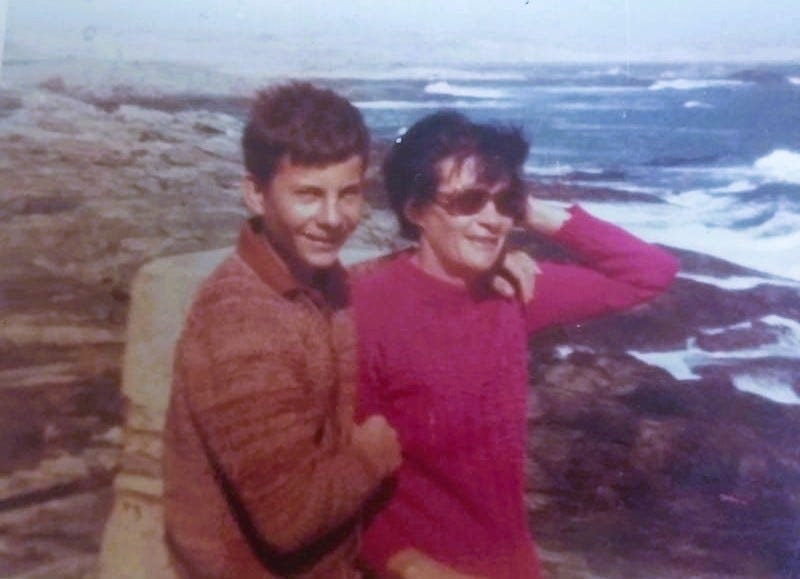
Anna Johanna Dorothea Nel – called Annie or Anaat – was born in Sacangimba, Angola on Sunday, 11 June 1911, under the star sign Gemini in the Chinese year of the Pig. She belonged to the Greatest Generation, a generation which lived through World War II, was frugal, and knew how to work hard.
She was the tenth child of twelve and the sixth daughter of her parents, Petrus Johannes Nel (1863) and Christina Gesina van Wyk (1874).
The year 1911 was a moment of change in the history of southern Africa. Only a year earlier, in 1910, the Union of South Africa had been created by joining several British colonies into a single country. While this new political union was forming to the south, Boer communities living in Angola remained far removed from these developments, surviving as small and isolated farming settlements.
While Anna Johanna Dorothea Nel lived her life—marrying, raising children, and making choices that shaped her family—the world around her continued to change.
Important events during Anaat’s life
1911 – 2 July: Baptism in Portuguese Angola in Sacangimba.
1914 to 1918 – World War I. The war in Angola, fought between the Allied Powers (including Portugal) and Germany, further isolated the Boer communities from their ancestral homeland and forced them into a struggle for survival—something Anna, her parents, and her siblings undoubtedly also experienced. The war and its aftermath solidified their status as a marginalized, ‘fossilised’ community.
1915 – South African forces occupy German South West Africa.
1920 – The League of Nations gives South Africa a mandate to govern South West Africa.
1927 – 15 March: Anna confesses her faith in church.
1928 – Boer settlers leave Angola and move south to South West Africa. Anna is not mentioned on any of the trek lists, but some of her siblings are.
1929 – 12 August: Married Pieter Jacobus Vorster (1903) in Gobabis, South West Africa.
Marriage certificate of Pieter Jacobus Vorster (1903-1955) and Anna Johanna Dorothea Nel (1911-1996)
1930 – 16 September: Birth of son, Petrus Johannes.
1932 – 20 April: Birth of daughter, Christina Gesina.
1934 – 1 April: Death of daughter, Christina Gesina, after a sickbed of thirteen days because of malaria.
1934 – 8 May: Birth of daughter, Cecilia Johanna.
1934 – South West Africa is administratively integrated with South Africa.
1936 – 23 February: Birth of daughter, Anna Johanna, in the Otjiwarongo region, South West Africa.
1937 – 31 October: Birth of son, Pieter Jacobus.
1939 to 1945 – World War II.
1940 – 3 February: Birth of son, Barend Johannes Marthinus.
1941 – 8 July: Birth of son, Willem Johannes, on the farm Leghorn in the Outjo region, South West Africa.
1945 – 17 September: Birth of son, Christoffel Daniël Schoeman.
1946 – 18 July: Divorce from Pieter Jacobus Vorster, after she failed to react to a letter from the attorney dated 16 May 1946 to get in contact.
1948 – Apartheid government elected in South Africa.
In 1948, the system of apartheid formally began in South Africa when the National Party won the general election. The party, led by D. F. Malan, campaigned on a platform of segregation of races and protecting the white minority rule. Although racial discrimination had already existed in South Africa for many years, the new government began turning segregation into a rigid system of laws and policies.
The apartheid regime officially categorized the population by race: white, Black African, Coloured, and Indian. Laws determined where people could live, work, travel, and receive education. The Population Registration Act and the Group Areas Act were among the most important laws used to enforce this system, while pass laws restricted the movement of Black South Africans.
The apartheid policies also applied to South West Africa (now Namibia), which had been under South African administration since the end of the First World War.
Opposition to apartheid grew steadily over the decades. Movements such as the African National Congress in South Africa and SWAPO in South West Africa resisted these policies. The system eventually collapsed in the early 1990s, leading to democratic elections in South Africa in 1994 and the independence of Namibia in 1990.
1955 – 28 August: Death of ex-husband, Pieter Jacobus Vorster (1903).
1955 – 3 November 1955: Marries Christoffel Daniel Wilhelmus Schoeman (1894), father of Anna’s ten-year-old son, and the daughter she was already about six months pregnant with at the time.
1956 – 17 February: Birth of daughter, Sara Marthina Schoeman.
1958 – 31 May: Death of husband, Christoffel Daniel Wilhelmus Schoeman, in Johannesburg.
1961 – 4 December: Marries Daniel Jacobus du Plessis (1898).
1966 – Start of the South African Border War between South Africa and SWAPO.
The South African Border War (1966–1989) was a long and complex conflict fought mainly in South West Africa (now Namibia) and southern Angola. The war began when the independence movement SWAPO started an armed struggle against South African rule and the refusal to grant the territory independence.
SWAPO’s military wing, the People’s Liberation Army of Namibia (PLAN), launched guerrilla attacks from bases in neighboring countries, especially Angola. In response, the South African Defence Force carried out military operations across the border, often deep into Angolan territory. The conflict gradually became part of the wider Cold War struggle in southern Africa.
Several other forces became involved. The Angolan government and Cuban troops supported SWAPO, while South Africa supported anti-communist groups fighting in Angola. Fighting took place across vast and sparsely populated regions, including the harsh border areas of northern Namibia and southern Angola.
The war lasted over two decades and affected many communities in the region. It finally ended in 1989 after international negotiations. Soon afterward, Namibia gained independence in 1990, bringing South Africa’s administration of the territory to an end.
1969 – The United States successfully landed the first humans on the moon with Apollo 11 in July 1969, fulfilling President Kennedy’s goal.
1971 – The International Court of Justice ruled that South Africa’s presence in Namibia was illegal.
1975 – The Angolan Civil War begins after independence from Portugal.
1979 – 28 January: Death of husband, Daniel Jacobus du Plessis, in Windhoek, South West Africa.
1986 – 26 April: The Chernobyl nuclear disaster happens near the Ukrainian cities of Chernobyl and Pripyat, near the border with Belarus. Reactor 4 of the nuclear power plant explodes during this accident after a test.
1988 – Tripartite Accord, signed by Angola, Cuba and South Africa, sets Namibia on path to independence. It is a pivotal diplomatic agreement that ended foreign military involvement in Angola.
1989 – Fall of the Berlin Wall.
1990 – 21 March: Namibia officially gains independence, with Sam Nujoma as its first president.
1996 – 30 March: Anna dies in Namibia, and is buried in the Gammams Cemetery in Windhoek, Namibia.
The grave of Anna Johanna Dorothea Nel in Windhoel
11 June over the years…
1430 – Birth of Edmund Tudor, First Earl of Richmond and patriarch of the Tudor Dynasty, in Much Hadham Palace, Hertfordshire, England.
1509 – Henry VIII marries his first wife, 23-year-old Catherine of Aragon, in a private ceremony at Greyfriars Church in Greenwich.
1776 – The Continental Congress appoints the Committee of Five (Thomas Jefferson, John Adams, Benjamin Franklin, Roger Sherman, and Robert R. Livingston) that drafts the United States Declaration of Independence.
1910 – Birth of Jacques Cousteau, French ocean explorer and conservationist.
1928 – Birth of Queen Fabiola of Belgium (Doña Fabiola de Mora), Spanish wife of King Baudouin, Queen consort of the Belgians (1960-93), in Zurbano Palace, Madrid, Spain.
1962 – Inmates Frank Morris and brothers John and Clarence Anglin escape from Alcatraz Federal Penitentiary, the maximum-security prison on Alcatraz Island in San Francisco Bay, California, United States.
1963 – Buddhist monk Thích Quảng Đức self-immolates at a busy road intersection in Saigon, Vietnam, in a protest against the persecution of Buddhists by the South Vietnamese government of Ngo Dinh Diem.
The choices in life
Life is shaped by choices—some carefully considered, others made in moments of necessity or uncertainty. Sometimes we choose our path ourselves, and sometimes circumstances or other people make those choices for us.
History is full of such turning points. In 1928, Boer families in Angola left the country and trekked south to South West Africa in search of a more secure future. Decades later, political systems such as apartheid would shape the lives and movements of millions of people across southern Africa.
Choices also marked the life of Anna Johanna Dorothea Nel. She was born into a migrant Boer community in Angola, a community already shaped by the decisions of earlier generations to leave their homeland. Later in her own life came a choice that remains difficult for her descendants to fully understand: leaving her husband and children behind to begin a new life.
What prompted that decision? Was it unhappiness, hope for something better, or circumstances we can no longer see clearly? The answers may never be known. What is certain is that her choices, like those of the generations before her, left a lasting mark on the lives of those who came after.
 1