 11

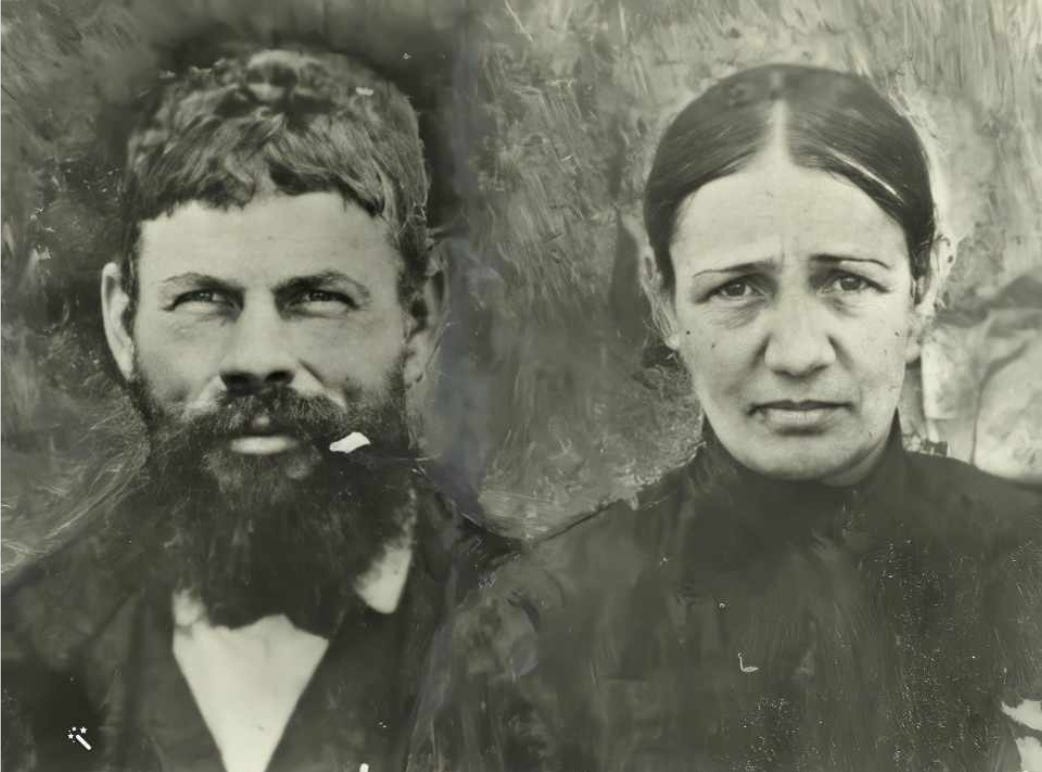
In the late nineteenth century, the interior of southern Africa was a region of migration, frontier farming, and political tension between Boer settlers and the expanding British Empire.
Cecilia Johanna Steyn was born in Kroonstad, Orange Free State, South Africa, on Thursday, 16 May 1872, under the star sign Taurus in the Chinese year of the Monkey. She belonged to the Missionary Generation, also known as the Post-Victorian Generation.
She was the second child and the second daughter of her parents, Johannes Hermanus Steyn (1846) and Susara Susanna Knoetze (1852).
The year Cecilia Johanna Steyn was born, Victoria Woodhull became the first woman to run for President of the United States. She was part of the Equal Opportunities Party, and an important activist for women’s rights, labor reforms, and the freedom to marry, divorce, and bear children without government interference.
Cecilia Johanna Steyn lived during a period of enormous change in southern Africa.

The Boer Wars were two conflicts fought in South Africa between the British Empire and the Boer republics during the late nineteenth and early twentieth centuries. The Boers were descendants of mainly Dutch settlers who had established independent states in the interior of southern Africa.
The First Boer War (1880–1881) began after Britain attempted to annex the Transvaal Republic. Boer forces resisted and won several surprising victories against British troops. The war ended with the restoration of limited independence to the Transvaal.
Much larger and more destructive was the Second Boer War (1899–1902). This conflict involved the Boer republics of the South African Republic (Transvaal) and the Orange Free State fighting against the British Empire. The war was partly driven by tensions over control of gold-rich territories and British influence in the region.
After early Boer successes, British forces eventually gained the upper hand. The war became notorious for its scorched-earth tactics and the use of concentration camps, where many civilians died from disease and poor conditions.
In 1902 the war ended with the Treaty of Vereeniging, bringing the Boer republics under British control and laying the foundations for the later creation of South Africa.
The Spanish Flu pandemic of 1918–1919 was one of the deadliest disease outbreaks in history. Caused by a highly infectious strain of influenza, it spread across the world in the last months of World War I and killed at least 50 million people.
The virus reached South Africa in September 1918, most likely carried by ships arriving from Europe at the port of Cape Town. It rapidly spread inland by rail and road, and within weeks, towns and rural districts across the country were affected. Hospitals couldn’t handle the number of patients, and many communities had little access to doctors or medicine. Roughly six percent of the population – an estimate of about 300,000 people – died in South Africa within a few months.
The epidemic also spread north into Namibia, under South African administration at the time. Remote farms, mission stations, and settlements were hit hard, often without medical assistance.
From there the disease moved further into southern Angola along trade and migration routes. In sparsely populated rural areas, entire communities could be affected. Although the most severe wave lasted only a few months, the pandemic left a lasting mark on families throughout southern Africa.
Cecilia Johanna Steyn’s life spanned a remarkable period in southern African history—from the independent Boer republics of her childhood to the global upheavals of the First World War. Her family’s journey from South Africa to Angola reflects the wider migrations and struggles of many Boer families during that era.
We mentioned remarkable women in this piece: Victoria Woodhull, the first female candidate for the presidency of the United States in 1872, and Junko Tabei, the first woman to reach the summit of Mount Everest.
Yet the most remarkable woman in this story is our own ancestor, Cecilia Johanna Steyn. She gave birth to her second child in extremely difficult circumstances, and at least two more of her children were born somewhere along the long road to a new home. The blood of this strong woman still flows in our veins.


One thought on “BACK IN TIME: Cecilia Johanna Steyn (1872–1918)”