 11

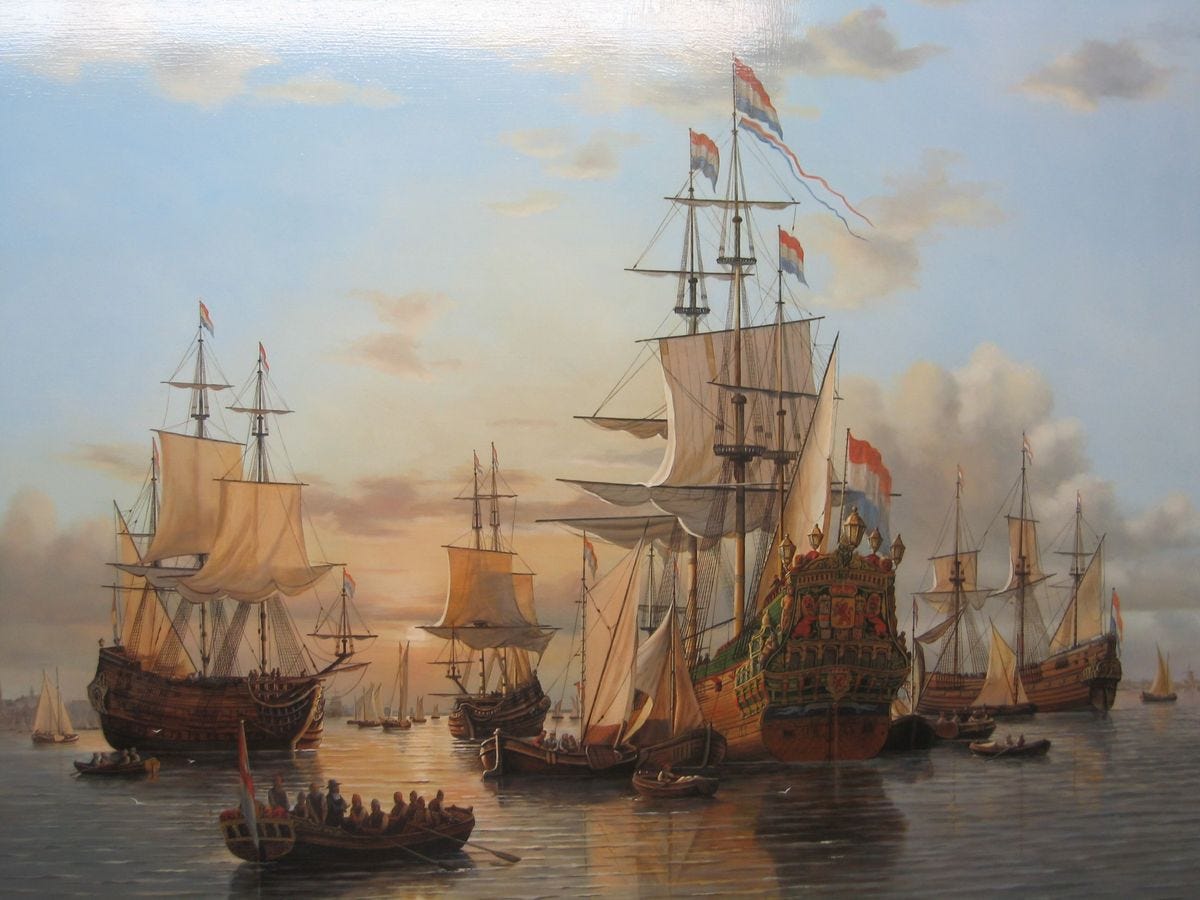
Before he became known as Jan Vorster, the founding father of the South African Vorster family, he was someone else. Someone with another name – a name spoken in a Swiss dialect, shaped by the dark forests and steep mountains of Bern.
Today, more than three hundred years later, nobody knows for certain what that original name was, or who his parents were. But we have clues, and together they form one of the most intriguing genealogical mysteries of the Cape.
I still remember the morning I left home. The mountains around our village were covered in mist, cold and grey. I stood on the small road with only a small bag of clothes and a few coins. I did not look back. If I looked back, I knew I would lose my courage.
Life at home had grown too heavy. Work was hard to find, and the winter before had been long and cruel. I was young, unmarried, and tired of feeling useless.
People said the VOC ships paid good money. They said you could change your life if you survived the journey. If you survived. That part stayed in my mind. But I had made my choice. I pulled my coat tighter and walked north, toward a future I could not see. I did not know how far my choice would take me, or what it would cost.
Jan was born around 1695 in the canton of Bern, Switzerland. At that time, Switzerland had no single “Swiss identity.” Each canton had its own dialect and writing style. Names were written in different ways by different clerks.
The family name Förster was common in several Bern parishes. It meant “forester,” a man who worked in the woods. It appeared as:
The short name Hans was a normal nickname for Johannes, and in Dutch lands Hans became Jan. So the man later known as Jan Vorster may have been born as Hans Förster, Johannes Forster, or Johann Vöster.
When I left Bern, the road felt endless. I walked from village to village, sleeping in barns or beside rivers. I followed traders, farmers, and other young men who also hoped for work in the cities of the north.
Crossing borders in those days was easy. Many small states stood next to each other, but most men like me could pass without questions. If someone asked, I told them my name and that I was looking for work. Sometimes my name was written down, sometimes nobody cared.
As I walked farther away, the sound of my own dialect began to feel strange, like it belonged to someone else. People on the Rhine started calling me Hans. Sometimes Hanns. Sometimes Hanns Förster. I answered to all of them. I did not know then that my name would keep changing.
A Swiss young man leaving around 1710–1715 would cross through several small states, none requiring passports for ordinary workers. He likely walked a route like this:
Bern → Basel → Strasbourg → Mannheim → Koblenz → Cologne → Nijmegen → Amsterdam
There were no passports for ordinary laborers. Only a few groups needed written permission to leave Switzerland, mostly guild-trained craftsmen. A young man like Jan could travel freely. Even if he did have some kind of written permission, border guards rarely recorded such travellers. This is why no trace of Jan exists before he reached the VOC.
Amsterdam shocked me. The city smelled of fish, tar, smoke, and too many people. I had never seen so many ships. Some were larger than the church in my village. Men shouted in languages I did not understand. Wheels rolled over the cobblestones, ropes creaked, and metal clanged. I felt very small.
A VOC clerk sat behind a wooden table. He held a quill in one hand and barely looked at me.
“Name?” he asked.
“Johannes Förster,” I said carefully.
He wrote quickly. It did not look like my name. The letters were sharp and foreign.
“From Bern,” I added.
He nodded without interest. And just like that, I no longer belonged to home. I belonged to the VOC.
Later I saw my name written again on a list: Hans Voster. I stared at it for a long time. That was me, and yet it was not.
Names changed easily. Along the Rhine and in Dutch ports, “Johannes” became Johannis, “Hans” became Jan, and “Förster” became Forster. Dutch clerks turned “Forster” into Vorster, because V and F often switched depending on accent.
By the time he reached Amsterdam, he may have introduced himself as “Johannes Förster.” The Dutch clerk wrote down “Hans Voster.”
These changes were normal, not mistakes. Clerks wrote what they heard. Few people could read or spell their own names. This is how Jan became the man we know today.

The ship they assigned me to – the Velserhoofd – looked like a wooden mountain. I had never seen anything that big. When I stepped onto the deck, my legs felt weak.
Life on the ship was rough. The smell of wet rope, old fish, sweat, and sickness stayed in the air. Some men cried at night, some prayed, and some did not survive.
I kept thinking that if I lived through this, everything would change.
On 13 May 1717, Hans / Jan arrived at the Cape of Good Hope aboard the Velserhoofd. A few years later, around 1721, he married Elisabeth (Barend) Lubbe, a woman whose family came from Germany (Lubbe/Löbe) and the Netherlands (Brandenbúrgh).
They had three known children:
These names reveal more than you would expect.
Swiss, German, Dutch, and early Cape families shared a tradition:
When we apply this to Jan and Elizabeth, something fascinating appears.
Their first daughter, Aletta (1722), does not point to Jan’s mother – as people once assumed. Instead, it matches Elizabeth’s maternal grandmother, the Dutch woman Aeltie Brandenbúrgh.
Why would they honour her first?
Because the Brandenbúrgh / Lubbe family had wealth and status, and naming a first grandchild after the matriarch reflected respect and alliance.
Their first son, Jan (1724), does follow tradition. He was named after Jan’s father, whose original name was likely Johann, Johannes, or Hans.
Their second son, Barend (1726), also follows tradition and is perfectly named after Elizabeth’s father, Barend Lubbe.
So, of the three children, two were named after the Lubbe / Brandenbúrgh side, and only one after the Vorster / Swiss side.
This tells us two things:
Sometimes, when my children were asleep, I sat outside and looked at the mountains of the Cape. They were different from the mountains of my youth, but they still made me think of home.
I wondered if my mother still lit the fire in the mornings. I wondered if my father still walked the forest paths. I wondered if they knew I was alive.
But the world was too big, and the ocean between us too wide. I knew I would never see them again. So I held my children close and gave them the names that kept my parents’ memory alive.
Jan and Elizabeth’s son, Barend Vorster, born in 1726, later had children of his own. His first son was Barend Johannes Vorster.
This is very interesting, because Barend also did not follow the normal naming rule.
According to tradition, Barend should have named his first son after his father’s father (Jan’s father, the unknown Swiss grandfather). But he didn’t.
He named the boy Barend, after his own maternal grandfather, Barend Lubbe.
Why would he break such a strong tradition?
Because, again, the Lubbes were financially strong, socially respected, and connected through the Brandenbúrgh line. Naming the first grandson “Barend” honoured a respected patriarch. It strengthened the bond between the Vorsters and the Lubbes.
But he added a second name: Johannes. This honoured his father Jan and kept the Swiss/Vorster family line alive in the child’s full name.
So the boy carried both lines:
A perfect political and emotional balance.
Searching for Jan’s true name, or his parents’ names, is like following footsteps in melting snow. But the clues are still there.
By studying the origins of the names, and looking at the names of his children and grandchildren, we can see which names belong to which side.
His descendants repeat the names Aletta, Maria, Johannes, Johanna, Jacobus, Pieter, Stephanus, Martinus, Willem, and Adriana – names likely carried from Bern into Africa.
Common names from the Swiss / Vorster side (Bern):
Common names from the Lubbe / Brandenbúrgh side (German-Dutch):
Early generations of Vorsters show a mix of these, proving that both lines shaped the family identity.
Even if we manage to figure out what Jan’s parents’ names were, the search would still be difficult.
Baptism books from 1690–1700 in Switzerland are challenging because pages are often torn or missing, ink has faded, and clerks used initials and abbreviations. Dialect spellings vary wildly, and many families share identical names. Records were kept in small church books, not in central archives.
For example, a single entry for Jan might have been written as:
Researchers have searched for more than 300 years, and still the trail before Amsterdam remains invisible.
His children and grandchildren kept the memory of his parents alive without ever knowing them. And somewhere in an archive in Switzerland, perhaps in a faded book with broken edges, there may still be a baptism record that says something like:
“Hanns, son of Johannes Förster, baptized in Bern, 1695.”
Sometimes, in the quiet hours before dawn, I wonder if anyone will ever know my whole story – the boy I was, the name I carried, the parents I left behind. Maybe the old church book in Bern still holds my baptism, written in faded ink. Maybe one day someone will find it.
But even if they don’t, I know this: My children carried pieces of my past into their future. Aletta, Jan, and Barend grew up under the African sun, far from the forests of my childhood, yet their names held the echoes of everyone who came before.
And from them, and their children, and their children’s children, a family grew.
A family that still searches for the man I used to be.
The day Jan Vorster’s baptism entry is ever found, it will close one of the oldest genealogical mysteries of the Cape.
A young man who left the mountains of Switzerland, crossed half the world, changed his name many times, and began a family line that still carries pieces of him today.


