 11

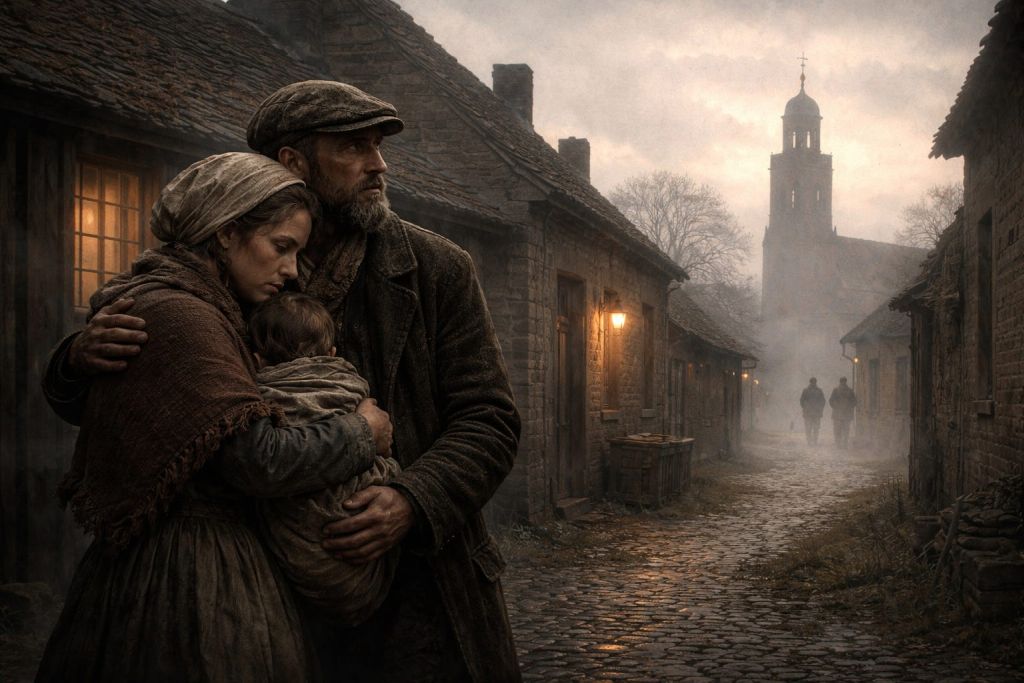
At a time when marriage in the church was the norm, Grietje Alberts Kuiper and Christiaan Geerst Swaak built a life together without marrying. They had two children and stayed together until the authorities separated them.
Christiaan was born in Aduard, Groningen, Netherlands on 5 August 1792, the fourth child and second son born to his parents, Geert Hindriks Swaak (1760-1813) and Joanna Christiaans Schok (1760-1800).
He married Auktje Jans van der Schaaf (1791-1826) in Ezinge, Groningen, Netherlands on 1 June 1815. Their son, Gerardus Hendriks Swaak, was born on 27 February 1816, and their daughter, Bouktje, was born on 15 March 1819. Christiaan’s wife died on 7 August 1826, leaving him a widower with two young children.
We don’t know when Grietje and Christiaan became a couple, but obviously it must have been after the passing of his wife, Auktje.
In those times, when a wife passed away and left a father with the care of two young children, records frequently showed the father marrying again within months. Therefore, we can assume that Grietje Alberts Kuiper appeared on the scene soon after the passing of Auktje.
However, there is a two-and-a-half-year gap between the death of the wife and the birth of Grietje and Christiaan’s first son. This then leads us to believe that Christiaan might have been alone with his two young children for some time before he met Grietje.
What we don’t know is what happened to Christiaan’s children. There is absolutely no record of them between their births and their first marriages. Maybe they stayed with Grietje and Christiaan, but because of the lack of records, we assume they were in the care of Auktje’s family.
We make this assumption because of the records we found for Grietje and Christiaan. The couple, as well as their son, Marten, are mentioned in documents of the Society of Benevolence, but not Christiaan’s first son and daughter. Connecting the family of three to the penal colonies in Drenthe, Netherlands, suggests that money was an issue, which might’ve made it impossible for them to care for Christiaan’s two young children.
Another assumption we can make is that money was also what kept Grietje and Christiaan from marrying. After all, getting married costs money, even if only having a civil ceremony and not a church wedding.
That, however, wasn’t the only reason.
Christiaan was of the Roman Catholic faith, while Grietje belonged to the Reformed Church. Because of the absence of an official union between the two of them, we can assume the difference in their religions was another stumbling block for them.
Society frowned upon mixed marriages, but also, Christiaan had to pay to get dispensation from the Catholic Church to marry someone from the Reformed faith, and we already know money was something this couple didn’t have. Then there was the decision Grietje and Christiaan had to make about children born into their relationship. Christiaan’s church could demand that they raised the children as Catholics, or otherwise no dispensation would be granted.
Both faiths strongly discouraged mixed marriages.
Grietje watched as Christiaan walked down the street, heading out for yet another day of searching for a job. He’d been home late last night, having walked to several of the small farms outside the town, hoping to find work on the land. Sadly, he wasn’t successful. Farmers would rather do the work themselves than pay someone else to do it.
Her eye caught sight of the church tower. An ache gripped her, sudden and all-consuming.
There would be no wedding.
Her throat tightened as the words settled. How she wanted to be Christiaan’s wife, to walk down the aisle to where he waited for her, to place her hands in his and speak the vows that would bind them together.
She imagined herself in a simple, long, white dress, and Christiaan in a dark suit. Despite their dire circumstances, he would look at her as though nothing else in the world mattered. Their union, made by love, would carry them through whatever life might place in their path.
Grietje shook her head, as though she could rid herself of the thought.
They were together, but there would be no wedding.
The truth settled heavily, as though it had been waiting for her all along. She couldn’t shake the feeling that something essential had been left behind.
The first record that shows Grietje Alberts Kuiper and Christiaan Geerts Swaak as a couple is that of the birth of their first son, Albert Christiaans Kuiper, on 25 January 1829. Then again, only seven days later, on 1 February 1829.
In the birth record, Christiaan had acknowledged being Albert’s father. The second is the record of their baby’s passing.


A year later, they saw the birth of their second son, Marten Christiaans Kuiper.
Implementing the Civil Registry in 1811, which mirrored French legislation under Napoleon, led to the official government registration of births, marriages, and deaths. The establishment of naming in a legal capacity occurred concurrently. Even if a father had recognized a child as his own, children born outside of marriage inherited their mother’s last name.
For this reason, Marten carried the name Kuiper, and not Swaak. His children and their descendants carried this surname forward into the next generations.
Just like with Albert, Christiaan also acknowledged Marten as his child.

Christiaan’s presence in the birth records of both children is telling. By declaring the births himself and being named as the father, he did more than just fulfilling a formal requirement.
He made the deliberate choice to stand by his children.
At a time when many men remained absent from such records, his acknowledgment gave his sons a recognized link to him, however limited that recognition may have been in legal terms.
The boundaries of the system remained clear: without marriage, his acknowledgment didn’t alter their legal status. In the eyes of the law, the children still carried the status of being “illegitimate”, bearing their mother’s name and lacking the full rights of children born within marriage. They were his children, and he said so openly, but the law, as well as society, placed them and their mother just outside its full protection.
We have absolutely no insight into the life that Grietje and Christiaan had together, other than that they didn’t marry, had two children together, and arrived in Ommerschans on the same date.
Mostly, people didn’t arrive in Ommerschans by choice. It was a penal colony where authorities sent those who had misbehaved in the free colonies, or where governments of provinces sent beggars and vagrants to rid themselves of a ‘problem’.
Grietje dashed out of the barn, hoping the farmer wouldn’t see her. She and Christiaan had sneaked in there late the night before, desperately looking for a place to sleep. They had left their lodgings three months before, when their money ran out and they couldn’t pay the landlady anymore.
Christiaan never managed to get a job. It wasn’t for lack of trying. Grietje had also tried. She’d offered her services as cleaner, as baker, and even offered to work on the land, like the men. People glanced at her once, saw her dirty clothes, then sent her away. She knew carrying her child in her arms when asking for work hadn’t helped either.
Pressing Marten close to her chest, she managed to get off the property without being seen. By the time they reached the town, Marten had cried himself to sleep. She knew he was hungry, but she had no food for him. She’d given him some water from the stream running parallel to the road, and for a few moments wondered if she could give him some grass or maybe roots of the wild plants. Not knowing which were poisonous, she didn’t.
In town, she walked to the back of the bakery, hoping to find old bread, but if there were any, someone else had already taken it. Grietje heard movement behind the door. Shifting Marten’s weight to one arm, she knocked.
“Please, some bread. My child…” she started when the door opened a crack and instantly swung shut again.
Marten woke up and started crying again.
Grietje shuffled around the corner towards the street, saw the church tower and headed there. Maybe they would have soup there today? They did a couple of days before. As she passed the butcher, she saw Christiaan at the side door in the alley, his hands folded as if in prayer, begging for scraps.
His shoulders were as hunched as hers.
A commotion down the street diverted her attention.
Instinctively, she hurried towards Christiaan as the butcher’s gruff voice bounced off the opposite wall of the alley: “Leave, you filth! There’s nothing here for your kind.”
The door slammed shut, but before Christiaan could move, two policemen blocked the daylight. Grietje hugged her sobbing child closer, as Christiaan’s arm protectively circled her shoulders.
They knew this day would come. Knew the authorities would come for them.
Maybe tonight they would at least have a warm meal.
It was because of these records we found – the registration in Ommerschans – that we know Grietje and Christiaan didn’t have the means to support themselves. Maybe they were relieved to be sent to the colony, knowing they would have food in their bellies every day.
However, had they really known what was waiting for them at ‘De Schans’?


2 thoughts on “BECOMING KUIPER – Part 6: When Love Was Not Enough”