 11

Continued from…
In our modern world, surnames often feel like simple labels. We inherit them from our parents and rarely stop to think about where they came from. But in the past, a name was much more than just a word on a paper. It was a story. It told the world who you were, where you belonged, and the kind of life your ancestors lived.
For the Du Toit family, their name was a quiet promise of safety. It was a word that spoke of home, long before they were forced to leave their homeland forever.
In the old days, people did not always have last names. In a small village, you were simply “Jean” or “Pierre.” But as villages grew into towns, people needed a way to tell one Jean apart from another. They started using descriptions. Some names described the work someone did, like a “Baker” or a “Smith.” Others described the family they belonged to.
The name Du Toit is a perfect example of a third kind: a name that described a place. In the French language, the meaning is very clear: “du” means “of the” and “toit” means “roof.” Put them together, and Du Toit literally means “from the roof.”
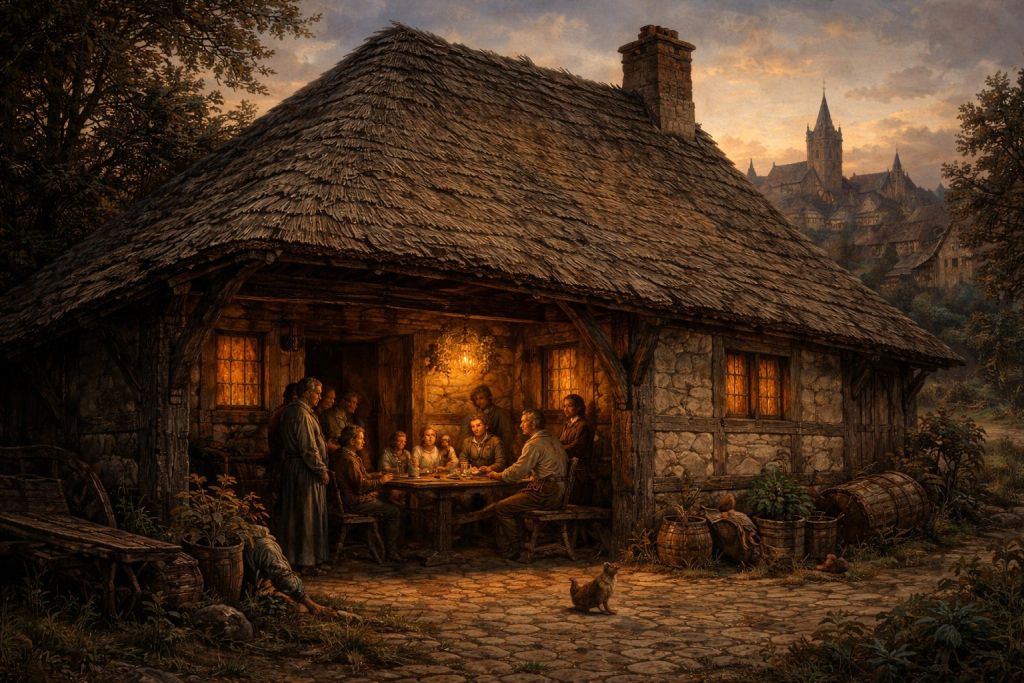
This might sound strange today, but in medieval Europe, it was a common way to identify a family. Imagine a small village where most houses were simple and low. If one family lived in a house with a very high, sturdy, or recognizable roof, they became known by that landmark. Perhaps it was a large stone farmhouse or a building that served as a shelter for the whole community. Over many years, “Jean from the house with the big roof” simply became “Jean du Toit.”
In those times, a roof was more than just wood and tile. It was a powerful symbol. It represented protection, warmth, and belonging. It was the shield that kept a family safe from the rain, the cold winds, and the dangers of the outside world. To live “under one roof” meant you were part of a team—a family that stood together. Long before the Du Toits were swept up in the storms of history, their name stood for the strength of a home.
As the centuries passed, this family identity was captured in a visual form: the family coat of arms. A coat of arms was like a silent language. Every shape and every color told a story about the family’s values and their history.
At the center of the Du Toit shield is a strong, blue V-shape. This shape is called a “chevron.” It mirrors the steep slope of a roof—a clever and proud nod to the family’s original name. It reminds everyone who sees it that this family knows the value of a strong foundation.
But the shield tells an even deeper story. It also displays three blue birds. In the language of heraldry, these birds represent movement and the long, difficult journeys that lay ahead. They are symbols of hope and the endurance needed to travel far away from everything you know. These birds show a family that can fly across borders, carrying their spirit with them from the green fields of France to the distant, wild shores of South Africa.
Above the shield stands a golden lion. The lion is a traditional symbol of bravery and leadership. It shows a family that is prepared to stand firm and protect their own when life gets difficult. Even the colors were chosen with care:
Together, these elements paint a picture of a family that values loyalty, bravery, and the protection of the home. These qualities were not just decorations on a shield; they were survival tools.

The Du Toits would soon face a time when their faith and their safety could no longer be taken for granted. They were entering a period of history that would test their strength to the very limit. While the name Du Toit promised a roof and protection, no roof was strong enough to withstand the coming tide of history.
A deep divide was growing in France. It was a conflict that would force thousands of families to make an impossible choice: to stay in the home they loved, or to follow the faith they held in their hearts. To understand why the Du Toits eventually left their “roof” behind, we must first look at the people they belonged to—the Huguenots.
Continued here…


2 thoughts on “BLOOD OF THE HUGUENOT – Part 2: Under One Roof”