 11

The Second World War did not begin with sudden chaos, but with a slow tightening of fear across Europe. In the years leading up to 1939, Adolf Hitler and Nazi Germany had grown increasingly aggressive. Germany had rearmed, violated treaties, and annexed neighboring regions – first Austria in 1938 and then the Sudetenland region of Czechoslovakia later that same year. Many European leaders hoped to avoid another devastating war, and so German expansion was tolerated longer than it should have been.
But on 1 September 1939, the tension finally snapped. German troops invaded Poland, using a fast and brutal military strategy known as Blitzkrieg – “lightning war” – a combination of sudden air attacks and rapid ground assaults. Two days later, Britain and France declared war on Germany, and the Second World War had officially begun. Within months, German forces swept through Denmark and Norway, and by May 1940 they struck Belgium, Luxembourg, and France.
On 10 May 1940, despite Dutch neutrality, German forces launched a surprise invasion of the Netherlands. Within days, cities were bombed, including the devastating destruction of Rotterdam on 14 May. Faced with overwhelming force and the threat of more bombings, the Dutch army was forced to surrender.
From that moment on, the Netherlands was occupied territory. Life changed overnight: fear, restrictions, shortages, and the constant presence of German soldiers.
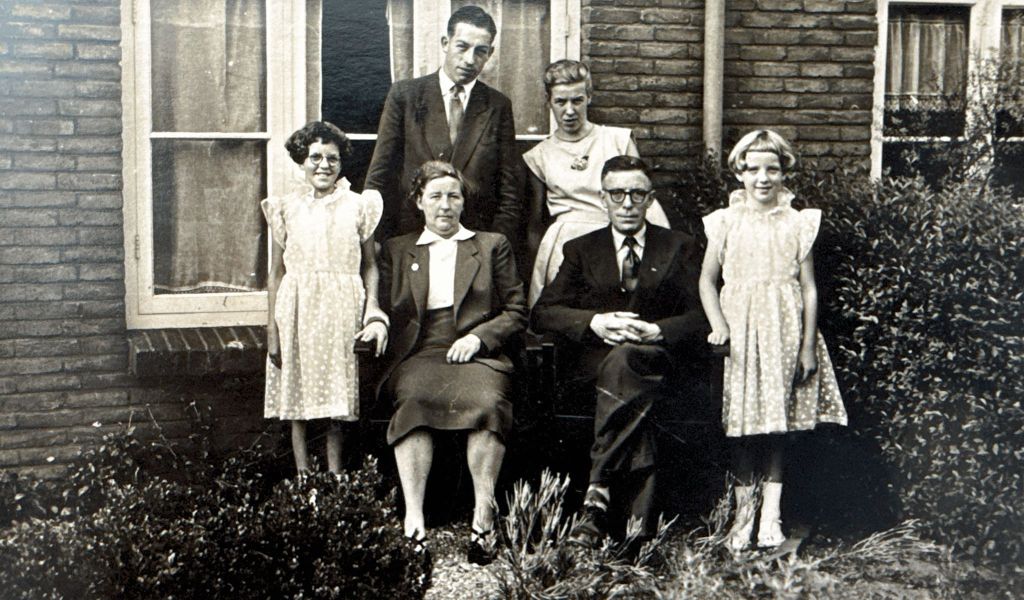
In Nijmegen, a city near the German border, families felt the tension long before the soldiers arrived. Among them were members of our Kuiper family: Jan Kuiper and Ottolina Kuiper-van Doeland – a young couple with small children, living on the Kamperfoeliestraat.
Their story does not begin on a battlefield or in a political chamber, but in a humble home where ordinary people did what they could to stay safe, stay warm, and stay together as Europe descended into darkness.
We can never truly know how scared they were, what their private fears were, or how they felt during those uncertain years. We can only try to imagine it, to picture ourselves in their place for a moment and understand what it might have been like to raise a family in a world turned upside down.
Although parts of this story are fictionalized to bring their experiences to life, it is written with deep respect for their memory, their struggles, and the strength they carried through those difficult times.
The spring sun shone softly over Nijmegen. The trees on Kamperfoeliestraat moved gently in the breeze and cast long shadows on the pavement. In the house at number 62, a little boy played in the living room with a wooden pull-toy. Little Marten walked back and forth while his mother kept an eye on him from the kitchen.
Ottolina (Lien) stirred a pot on the stove, letting the warm smell of dinner fill the room. Her hands worked steadily, but her eyes stayed soft as she watched Marten. “Careful with that train, Marten. Not on the carpet!” she said. Marten giggled and pulled his toy away from the table.
Jan Kuiper, her husband, returned from the factory – Willem Smit & Co’s Transformatorenfabriek – with a bag of groceries. His workday had been long, but his face lit up at the sight of his family. He lifted Marten and kissed him on the forehead. His eyes rested on Ottolina for a moment, and everything felt calm and perfect.
Life in the Kuiper home was simple but happy. Marten loved exploring, and Anna (Ans), born in December 1938, was a baby who filled the house with laughter and soft cries. Ottolina found comfort in her daily routines. Washing the clothes, tidying the house, preparing meals, listening to the trains, and watching her children grow.
The street outside was full of life. Neighbors greeted each other, children ran along the sidewalk, bicycles rang their bells as they passed, and the smell of bread and flowers floated in the air. For Marten and Anna, the world was safe, full of adventure and small joys.
But in the distance, dark clouds gathered over Europe. In 1939, Germany invaded Poland, and news of the war spread quickly through Europe. People in Nijmegen heard whispers of battles on the radio, though the broadcasts were sometimes unclear or full of worry.
Families gathered around the small wooden radio in their homes or listened to whispered conversations of neighbors. Sometimes a passerby would shout urgent news in the street, and people would anxiously pause, staring at each other with fear in their eyes.
Jan and Ottolina noticed the tension everywhere. They tried to protect their children from what they did not fully understand. In the evenings, Jan would read the newspaper quietly, folding the pages so the children could not see the headlines about German armies marching and cities under threat. Ottolina kept Marten and Anna close, whispering, “Do not worry, my loves. We will keep each other safe.”
Even in small, everyday moments, the news made their hearts pound. A train whistle outside could sound like a warning. A neighbor running to the shop might be carrying urgent messages or gossip about soldiers moving closer. The children sensed the unease, though they could not understand it fully. The Kuipers learned to move carefully, to speak softly, and to prepare silently for a future that seemed uncertain and frightening.
In May 1940, German soldiers marched into the Netherlands. The first attacks came in cities like Rotterdam and The Hague, where bombs fell on buildings and ships in the harbor. The first German planes dropped bombs on Rotterdam on May 14, 1940, destroying much of the city. Nijmegen was not bombed at first, but the news of the attacks spread quickly. People in the city listened to the radio, or overheard neighbors whispering about the destruction in other towns.
The Kuipers’ lives changed suddenly. Soldiers now patrolled the streets of Nijmegen. Curfews were set, shops were closed or limited, and rationing began. Food and milk were harder to find. Marten began to understand that the world was dangerous. One evening he asked his mother, “Why are the soldiers here, Mama?” Ottolina hugged him close. “Some people make wrong choices, my love. But we will keep each other safe,” she said. Jan nodded silently, worrying about how he could protect his family.

Food became scarce. The Kuipers had ration cards for bread, milk, and sugar, but it was never enough. Sometimes neighbors shared vegetables from their small gardens or gave a loaf of bread when they could. Ottolina and Jan became careful planners, making every meal stretch further.
Marten played with toy soldiers, imagining they were friendly helpers protecting his family. Anna loved to sit nearby, listening to her parents’ stories of the times before the war, when life was safer and quieter. Jan tried to make the children laugh, even after long days at work.
Despite the difficulties, there were small joys. A sunny afternoon, a tidy home, a letter from a family member in another city. Ottolina reminded herself often that happiness could still exist, even in hard times. But every distant airplane, and every whispered rumor, reminded them that nothing was certain, and every day could bring change.
Historical Note: Persecution of Jews in the Netherlands (1940–1942)
When Germany occupied the Netherlands in May 1940, anti-Jewish measures were introduced slowly but relentlessly. At first, Jewish citizens were removed from government jobs and universities. Then identity cards were stamped with a large “J.” By early 1942, Jewish people were banned from public places like parks, cinemas, swimming pools, and even certain shops.
The restrictions intensified. Jews were forced to wear the yellow Star of David on their clothing. Jewish-owned businesses were confiscated. Families were rounded up during nighttime raids. Thousands were sent to the transit camp Westerbork, from where deportations to camps in the east began.

Dutch families like the Kuipers often heard rumors, saw neighbors disappear, or noticed familiar shops closed overnight. Many Dutch people tried to help by offering hiding places or false documents, but the fear of punishment was enormous. The penalty for helping Jews was imprisonment or execution.
In houses across cities like Nijmegen, whispered anxieties spread: “Where are they taking them?” “Will they ever return?” Most people did not yet know the full truth. But the fear was real, and the silence that followed each disappearance was unbearable.
By early 1944, Ottolina was heavily pregnant with her third child. A sense of unease hung over Nijmegen like a dark cloud. The city had changed. There were rumors of bombings, collapsing buildings, and shattered streets that reached even the quieter neighborhoods like Kamperfoeliestraat. Every distant roar of airplanes made Ottolina’s heart race.
On the morning of February 22, 1944, the family was at home when the first sounds began. Low, distant, but growing steadily louder. At first, they thought the planes were heading toward Germany, as they often did. But within moments, the sharp wail of air-raid sirens pierced the air. Jan froze. “That’s close,” he said, his voice tight. Outside, neighbors shouted and ran for cover as the rumble of engines grew deafening.
The first explosions echoed through the city. Even from Kamperfoeliestraat, farther from the center, the ground trembled violently. Dishes rattled in their cupboards, windows shook in their frames. In the distance, a deep orange glow rose over the rooftops.
Jan grabbed a few essentials – important papers, blankets, water, and a loaf of bread – while Ottolina pulled Marten and Anna close. Her round belly pressed against her chest as she tried to steady her breath. “Stay close to me,” she whispered, her voice trembling. Marten’s small hands clutched hers. Anna hid behind her skirts, her eyes wide with fear.
They hurried down the narrow steps to the basement, their familiar refuge during air raids. The room was dim and damp, smelling of earth and wood. Outside, the city roared. The sound of collapsing buildings, screaming neighbors, and the heavy thud of falling bombs. Dust drifted from the ceiling, settling on Ottolina’s hair and shoulders.
Marten pressed his hands to his ears, his heart pounding. To him, the planes sounded like enormous black birds, circling and screaming above the city. Ottolina hummed softly to calm the children, her voice barely hearable above the noise. Jan rested his hand against the cold wall, counting the seconds between explosions.
The bombardment felt endless. Each tremor brought new fear, a reminder that the destruction was near, even if they couldn’t see it. When the noise finally faded and silence fell, it was almost unbearable.
Slowly, the family climbed the stairs. The air outside was thick with smoke and dust, carrying the bitter smell of burning wood and debris from the city center. From their windows, they could see black columns of smoke twisting above the western part of Nijmegen. The once familiar skyline was blurred by flames.
Ottolina sank to the floor, clutching her belly and her children. Relief washed over her as she realized their home was still standing. Though many in the heart of the city had lost everything, the Kuipers had survived. Jan wrapped his arms around them, his voice hoarse. “We’re safe,” he whispered. Amid the fear and devastation, hope flickered. They were alive, together, and still standing.
Historical Note: The Bombing of Nijmegen (22 February 1944)
The bombing that struck Nijmegen on February 22, 1944, was not planned as an attack on the city itself. American bombers returning from a mission to Germany were forced to turn back due to bad weather. Mistaking Nijmegen for the German city of Kleef (Kleve), they released their bombs over the Dutch city. The western heart of Nijmegen – including Plein 1944 and the area around the Sint-Stevenskerk – was devastated. Around 800 people were killed, and large parts of the city center were destroyed.


Spring returned hesitantly to Nijmegen. The air was warmer now, but the city still carried the smell of dust and smoke. Everywhere you looked were scars of the February bombing. Gaping holes where buildings had stood, shattered glass glinting in the sun, and the silence of streets where laughter once echoed.
On Kamperfoeliestraat, the Kuipers tried to restore a rhythm. Jan worked long hours and spent evenings repairing damage around the house. Windows were replaced, walls patched, and furniture tightened where the tremors had left cracks. Ottolina’s pregnancy grew heavier with each passing week. Her body was tired, and her feet swollen, but she was calm and determined. “As long as the baby waits for peace,” she would whisper, her hands resting on her round belly.
When the day finally came, it was gray and still. Distant thunder rolled over the Waal, but the sky stayed dry. Inside the house, the air was thick with tension and hope. The midwife from down the street arrived before dawn, carrying her small black bag. Jan held Ottolina’s hand, whispering encouragement while Marten and Anna waited quietly in the kitchen, listening. Hours passed and then, at last, a cry filled the air. Sharp, strong, and alive. A baby girl.
They named her Roelfke, after Jan’s mother. Ottolina smiled weakly, tears mixing with relief. Outside, life continued. The sound of boots on the streets, and airplanes in the distance. But inside their little house, a fragile piece of peace had been born. That evening, Jan sat by the window with Roelfke in his arms, her tiny fingers curling around his thumb. He looked toward the west, where smoke still rose faintly from the city’s wounds, and whispered, “You came into a world at war, little one. But one day, you’ll live in peace.”
By autumn, the war had come closer again. Nijmegen was no longer a city behind the front – it was the front. Soldiers filled the streets, and the sound of artillery thundered from across the river. Everyone knew fear by then, but that morning it came back stronger than ever.
It was October 2, 1944. The day had begun quietly, though the sky was heavy with clouds. Then, around midday, the sirens wailed. Jan and Ottolina exchanged a glance. One that needed no words. “To the basement,” Jan said. Ottolina gathered the children, clutching baby Roelfke to her chest, while Marten and Anna clung to her skirt.
From their home on Kamperfoeliestraat, they heard the explosions in the distance. Heavy, steady blasts that made the ground shake. The sound came from the De Ruyterstraat, where the kapok factory stood. Later they learned that a bomb had hit the factory itself, causing the air-raid shelter underneath to collapse. Many people who had gone there to hide did not survive.
The Kuipers stayed in their cellar, close together, listening to the loud, rolling booms above them. When the explosions finally stopped, a heavy silence followed – so still it felt as if the whole city was holding its breath.
That evening, the wind brought the sharp smell of smoke and burnt wood. From their window, they saw a dark cloud rising above the De Ruyterstraat. “So close,” Jan whispered. Ottolina didn’t answer. She held Roelfke tightly and kissed the top of her head, feeling the baby’s small heartbeat against her chest.

Historical Note: Deportations and the Camps (1942–1945)
By late 1942, news began to trickle into the Netherlands about what was happening in the camps in the east. At first, people heard vague descriptions: hard labor, long transports, overcrowded barracks. But slowly, more horrifying stories emerged – accounts smuggled in by the Resistance, by escaped prisoners, or by railway workers who had seen the transports leave Westerbork.
Reports spoke of: Camps with electrified fences and armed towers. Starvation and disease. Families separated upon arrival. Gas chambers disguised as “showers”.
Many Dutch citizens could not believe it at first. The idea was too monstrous. Some insisted it must be exaggerated; others feared that even speaking of it aloud was dangerous. But as 1943 and 1944 passed, the truth became harder to deny.
By the end of the war, around 102,000 Jewish people from the Netherlands were murdered, one of the highest proportions in Western Europe. The “showers” became a symbol of the unimaginable cruelty of the Holocaust – rooms where people believed they would be washed, only to be killed with gas.
For families like the Kuipers, this information remained mostly distant and fragmented. They had no Jewish relatives nearby and did not see deportations directly from their street. But the fear crept into the city’s walls, into whispered conversations, into the heavy silence that fell when someone said, “They didn’t come back.”
The months that followed were among the hardest. The front line settled around Nijmegen, and the city became a battleground between Allied and German forces. Artillery shells screamed across the river. Nights were lit by the flashes of gunfire. The Kuipers no longer slept upstairs. Mattresses were brought down into the basement, where they lived half their days and nights.
Food grew scarce and the cold was merciless. Jan scavenged what he could. Coal fragments, scraps of wood, a few potatoes traded from neighbors. Ottolina tried to stretch every meal, keeping the children warm and quiet when the shelling started. Sometimes, when the explosions came too close, Marten covered his ears and whispered, “Make it stop.” Ottolina pulled him close and hummed softly, trying to chase the fear away.
By early February, the shelling had been going on for almost four months, ever since the frontline settled around Nijmegen in late 1944. Day after day, week after week, the city had endured the constant threat of incoming fire. And now, in those last days, it reached a terrible peak.
Windows along the Kamperfoeliestraat shattered once more, spraying glass across the floor. The children cried as the walls shook with every impact, and Jan stood at the basement door, listening to the rising whine of shells overhead. “It can’t be long now,” he said one night, his voice worn down by fear and exhaustion.
And he was right.
A few days later, the firing stopped. Suddenly, as if someone had turned off a switch. The silence that followed felt unreal, heavy after months of terror.
The next morning, church bells rang again for the first time in what felt like a lifetime. Slowly, people stepped out of their homes, blinking in the cold light, picking their way through debris and broken brick. The war was not over everywhere, but for Nijmegen, the worst had finally passed. After nearly four months under fire, the city could finally breathe again.
The Kuipers stood close at their doorstep, the pale winter light brushing their faces. Ottolina held little Roelfke, just eight months old, wrapped tightly in blankets, and for a moment, she let herself shiver. Not from the cold, but from relief. Marten and Anna clung to her sides, their small hands trembling. Jan’s eyes swept the silent street, empty and still, and then returned to the family he had fought so hard to protect. Tears stung his eyes, and Ottolina’s cheeks were wet too, but no words were needed. They had survived. They were together. That was everything.

In September 1944, Nijmegen was finally liberated. People poured into the streets, their voices rising in a mix of cheering, crying, and laughter that seemed to shake the very air. Marten and Anna ran among the ruins, their small feet kicking up dust, and their eyes wide as they took in both the scars of the city and the first glimmers of hope.
Jan and Ottolina stood together, holding each other tightly, tears running down their cheeks. After years of fear and uncertainty, they could finally imagine a future without constant danger. Relief and joy mingled with sorrow for what had been lost. The city was free at last, yet the devastation was everywhere. It was a silent reminder that life would not return to what it had been before the war. Still, in that moment, the promise of new beginnings shone brighter than the shadows of the past.

After liberation, life slowly returned. Shops reopened, schools restarted, and food became easier to find. Jan and Ottolina worked hard to give their children a safe, happy home.
On June 4, 1947, Geertje (Géke) Kuiper was born. Her birth was a sign of hope and renewal after years of struggle. The house at Kamperfoeliestraat 62, once threatened by bombs, became a place of warmth, safety, and stories of courage and love.
The Kuiper family had survived the darkest times together. Marten, Anna, Roelfke, and Geertje grew up in a house filled with memories of fear, hope, and family. Ottolina and Jan knew that keeping their family safe was their greatest achievement. Through fear, hunger, and uncertainty, it was love that had kept them together.
During the Second World War, the Netherlands suffered immense loss. An estimated 250,000 Dutch people did not survive the war. Among them were around 102,000 Jewish men, women, and children, murdered in the Holocaust. Tens of thousands of others died through bombings, executions, forced labour, imprisonment, the collapse of public health, and the devastating Hunger Winter of 1944–1945.
The road to liberation was long and painful. Different regions of the country were freed at different times, but the Netherlands as a whole was officially liberated on 5 May 1945, when German forces capitulated. The cost of this freedom was enormous: thousands of Dutch civilians and nearly 13,000 Allied soldiers lost their lives on Dutch soil during the final stages of the war.
Each year, the Netherlands pauses to honor these losses. On 4 May, the nation observes Remembrance Day (Dodenherdenking), commemorating all civilians and soldiers who died during the Second World War and in later conflicts. The following day, 5 May, is celebrated as Liberation Day, marking the end of occupation and the return of freedom.
Lest we forget.


