The early years of post-war Europe were a time when many families left their countries behind in search of new opportunities elsewhere in the world.
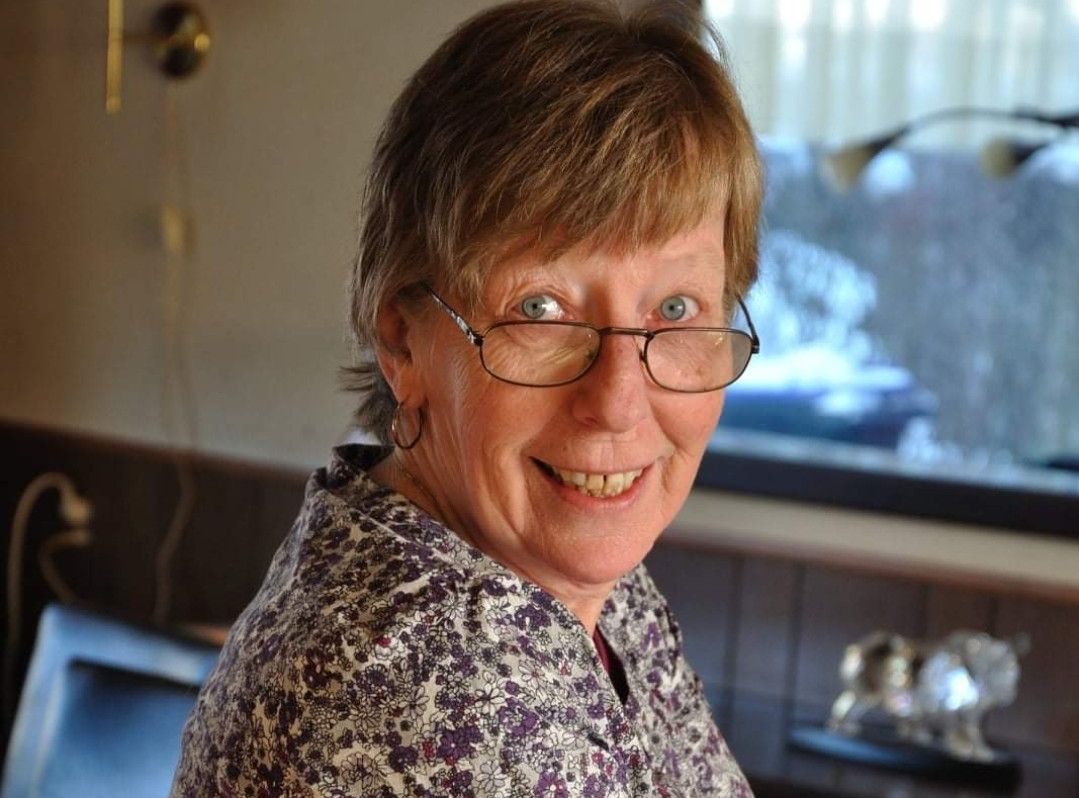
Geertje Kuiper – called Géke, later Gé – was born in Nijmegen, Netherlands on Wednesday, 4 June 1947, under the star sign Gemini in the Chinese year of the Pig. She belonged to the Baby Boomer generation, which grew up during a time of reconstruction and unprecedented prosperity and placed increasing emphasis on self-development and more liberal social values.
She was the fourth and youngest child and the third daughter of her parents, Jan Kuiper (1906) and Ottolina van Doeland (1912).
The year Geertje was born, Europe was still recovering from the devastation of the Second World War. That year the United States announced the Marshall Plan, a massive program of financial aid designed to rebuild European economies. The plan sped up economic recovery in Western Europe and helped lay the foundations for the prosperity that would shape the childhood of the Baby Boomer generation.
During her seventy years, Gé lived in two countries, raised a family, experienced several migrations, and witnessed some of the most dramatic political changes of the twentieth century.
Important events during Gé’s life
1948 – Belgium, Luxembourg and the Netherlands establish the Benelux Customs Union.
1949 – The Netherlands becomes a founding member of NATO, officially abandoning its long-standing policy of neutrality.
1949 – The Diamond Bourse in Amsterdam hosts a major exhibition to promote the city as a center of the diamond industry.
1953 – North Sea Flood of 1953 devastates parts of the Netherlands, and this leads to the Dutch Delta Works.
The North Sea Flood of 1953 was one of the worst natural disasters in modern Dutch history. It happened during the night of 31 January and 1 February 1953, as a powerful North Sea storm combined with high spring tides overwhelmed coastal defenses in the southwest of the Netherlands.
Dikes broke in many places, particularly in the provinces of Zeeland, South Holland, and North Brabant. Seawater flooded vast areas of farmland and villages while many people were still asleep, causing the deaths of 1.836 people. Tens of thousands of homes were damaged or destroyed, and over 200.000 hectares of land inundated.
Rescue efforts were extremely difficult. Roads were flooded, communication systems had failed, and many communities were cut off for days. Soldiers, volunteers, fishermen, and international aid teams worked together to rescue survivors and evacuate residents.
The disaster had a lasting impact on the country. In response, the Dutch government launched the ambitious Delta Works, a massive system of dams, storm surge barriers, and strengthened dikes. This was to protect the low-lying Netherlands from future floods. Completed over several decades, the Delta Works became one of the largest water-management projects ever built and remains a symbol of the Dutch struggle against the sea.
1955 – 22 October: Geertje leaves the Netherlands on the SS Zuiderkruis, emigrating to South Africa with her parents and siblings.
1955 – 7 November: Geertje, her parents and her siblings arrive in the port of Cape Town, South Africa, ready to start their new life in South Africa.
1960 – 21 March: Police opens fire on a peaceful Pan Africanist Congress (PAC) anti-pass protest in Sharpeville, killing 69 people and wounding over 180. In response, they declare a state of emergency and arrest over eighteen thousand people. From then on, this day is known as the Sharpeville Massacre.
1961 – 31 May: South Africa becomes a republic and leaves the Commonwealth, as a reaction to international pressure following the Sharpeville massacre.
1964 – 19 December: Geertje marries Willem Johannes Vorster (1941) in Vanderbijlpark, South Africa.
Marriage certificate of Willem Johannes Vorster (1941-2021) and Geertje Kuiper (1947-2017) – note how Geertje’s name is misspelled, and Vanderbijlpark written as two words.
1964 – Geertje starts her first job at Barclays Bank, Sasolburg, South Africa in June.
1967 – 25 February: birth of daughter, Antoinette, in Vanderbijlpark, South Africa.
1967/8 – Geertje and her family move to Uis, South West Africa, but after about half a year, they move back to Vanderbijlpark, South Africa.
1969 – 21 April: birth of son, Deon Andre, in Vanderbijlpark, South Africa.
1969 – 20 July: Apollo 11 lands on the moon. Neil Armstrong becomes the first person to walk on the lunar surface.
1970 – 12 November: In East Pakistan (now Bangladesh), Cyclone Bhola makes landfall and kills up to 500.000 people. It is the deadliest tropical cyclone ever recorded.
1976 – 16 June: Students in Soweto protest against the mandatory use of Afrikaans in schools, sparking a nationwide uprising.
1977/8 – Geertje and her family move to Windhoek, South West Africa.
1981/2 – Geertje and her family move to Bloemfontein, South Africa.
1983 – 12 November: Birth of granddaughter, Susan du Toit, in Bloemfontein, South Africa.
1985 – 23 May: Divorce from Willem Johannes Vorster.
1988 – 18 August: Birth of grandson, Quintin Ülrich Vorster, in Carletonville, South Africa.
1989 – 17 November: Marriage to Thomas Nicolaas Johannes Zwarts (1947) in Barkly West, South Africa.
1989 – As a symbol of the end of Soviet control in Eastern Europe, the Berlin Wall is opened, leading to the reunification of Germany.
1990 – 11 February: South Africa transitions away from apartheid, leading to the release of Nelson Mandela.
Nelson Mandela (1918–2013) was a South African anti-apartheid leader who became the first democratically elected president of South Africa and an international symbol of reconciliation and justice.
Born on 18 July 1918 in the rural village of Mvezo in the Eastern Cape, Mandela studied law and became involved in the struggle against apartheid, the system of racial segregation imposed by the white minority government. As a leading member of the African National Congress (ANC), he helped organize campaigns of resistance against discriminatory laws.
In 1962, Mandela was arrested and later sentenced to life imprisonment for sabotage and other charges. He spent 27 years in prison, much of that time on Robben Island. During these years, he became the most prominent symbol of the global movement against apartheid.
Mandela was released in 1990 as apartheid began to collapse. He played a key role in negotiations that led to South Africa’s first fully democratic elections in 1994. After the ANC’s victory, Mandela became president and worked to promote reconciliation between the country’s different communities.
In 1993, Mandela and President F. W. de Klerk jointly received the Nobel Peace Prize for their efforts to end apartheid peacefully. Mandela is remembered worldwide as a symbol of courage, forgiveness, and the struggle for human rights.
1991 – 10 January: Divorce from Thomas Nicolaas Johannes Zwarts.
1991/2 – Geertje returns to the Netherlands, first only to visit her mom, but she discovers she still holds Dutch nationality.
1994 – 10 May: Nelson Mandela becomes South Africa’s first black president after the first democratic elections in South Africa in April.
2001 – 11 September: Two passenger planes hijacked by Al-Qaeda terrorists crash into New York’s World Trade Center towers, causing both to collapse, and resulting in the death of 2.606 people. Passengers and crew of United Airlines Flight 93 attempt to retake control of their hijacked plane. The plane crashes in a Pennsylvania field, killing all 44 people on board.
2002 – Introduction of the Euro in the Netherlands.
2008 – Global financial crisis begins. After this crisis, the Dutch economy enters a severe multi-year recession, forcing the government to financially support major banks and insurance companies.
2010 – 11 September: Birth of great-grandson, Ohin Martino van Anraad.
2014 – 14 April: Birth of great-grandson, Iahn Martinez van Anraad.
2015 – 159 member states of the United Nations sign an international treaty, believing global warming can be curbed by implementing measures. This becomes known as the Paris Climate Agreement.
2017 – 12 July: Geertje dies of lung cancer in a hospice in Hendrik-Ido-Ambacht, less than six months after she has received the diagnosis.
2017 – 19 July: Geertje is buried in the cemetery at the Jeroen Boschlaan in Zwijndrecht, Netherlands.
Grave of Geertje Kuiper in Zwijndrecht, Netherlands
4 June over the years…
1783 – The hot-air balloon demonstration of the Montgolfier brothers takes place in France.
1812 – The U.S. Congress approves its first declaration of war (War of 1812).
1940 – Winston Churchill delivers the famous “We shall fight on the beaches” speech.
1942 – The Battle of Midway begins in the Pacific War. The United States Navy ambushes and defeats the Japanese fleet. Historians widely consider the Battle of Midway the turning point of the Pacific War. Japan loses four aircraft carriers that day, permanently shifting the balance of naval power.
1947 – Born on the same day as Geertje: Saoul Mamby (American boxer), Toni Wine (American session singer), and Viktor Klima (Austrian politician).
1971 – Birth of Noah Wyle, American actor, born in Hollywood, California. He is known for his role as Dr John Carter in ER.
1975 – Birth of Angelina Jolie, American actress, in Los Angeles, California.
Money and migration
Geertje Kuiper died only five weeks after her seventieth birthday. Her life had been divided almost perfectly between two countries: about thirty-five years in her adopted country, South Africa, and thirty-five years in the country where she was born, the Netherlands.
Throughout most of her working life, she was employed in the financial sector. Geertje Kuiper began her career at Barclays Bank in Sasolburg in 1964, when banking was still largely done with paper files and handwritten ledgers. During the decades that followed, the financial world changed enormously, with the rise of electronic banking, global markets, and new international currencies.
By the time the euro was introduced in the Netherlands in 2002, and later when the global financial crisis shook economies around the world in 2008, the financial world looked very different from the one in which she had begun her career.
Geertje’s life reflected the wider story of her generation: growing up in the hopeful years after the Second World War, building a life across continents, and witnessing the profound political and economic changes of the late twentieth and early twenty-first centuries.
Her life story reflects the journey of many families of her generation—shaped by migration, political change, and the constant search for a place to call home.
Like this:
LikeLoading…
Related
One thought on “BACK IN TIME: Geertje Kuiper (1947–2017)”
 1



One thought on “BACK IN TIME: Geertje Kuiper (1947–2017)”